
 Trip to Haiti from 22 to 28 February 2027 / From 2,990€
 Discover the highlights of this anthropological trip to Haiti
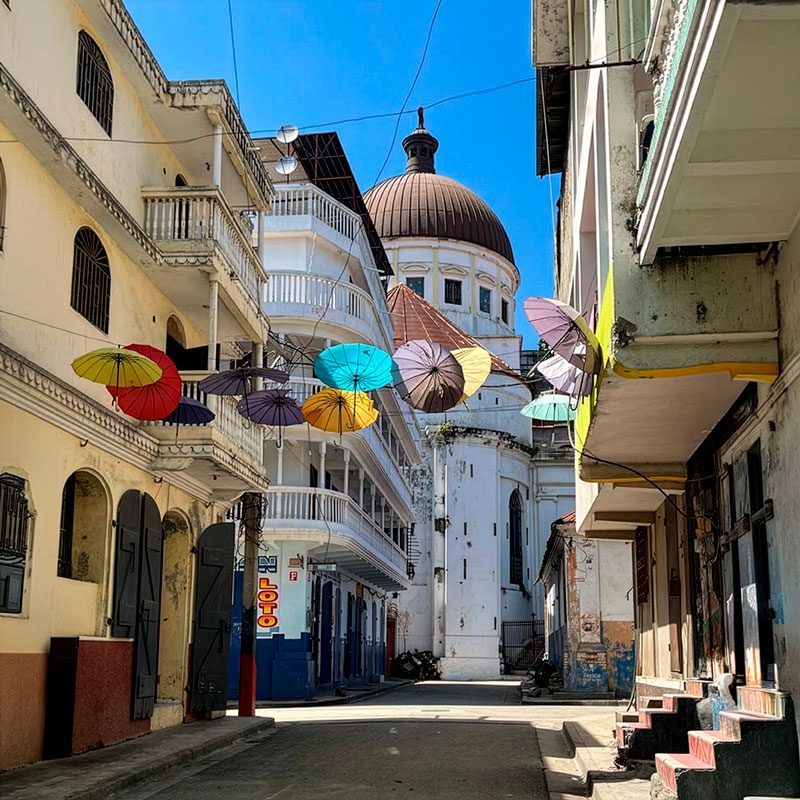
Cap Haïtien: architecture, Freemasonry and urban decline
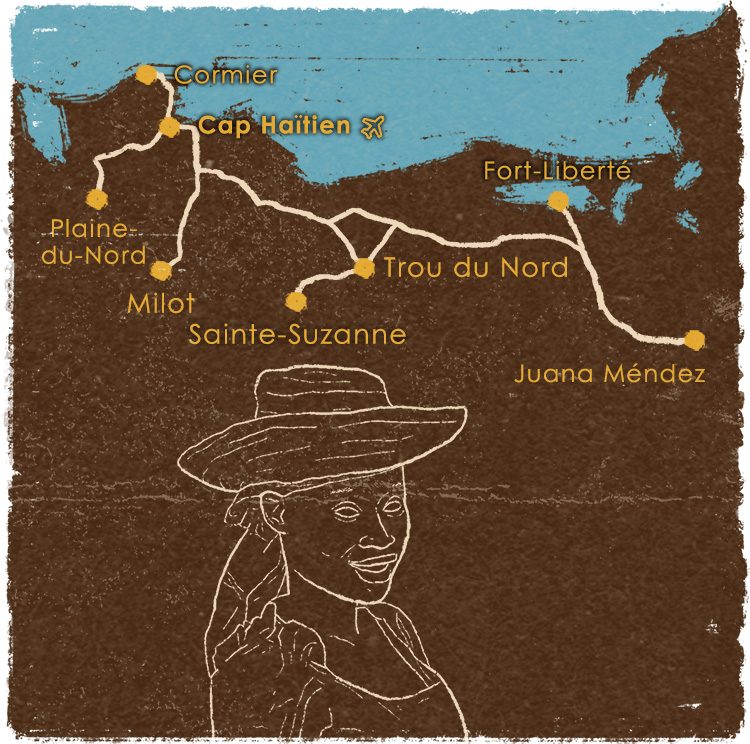
The anthropological trip to Haiti will begin in Cap Haïtien, the country’s former historic capital and one of its most emblematic cities. We will explore a fascinating city shaped by contrasts. In the past, it was one of the Caribbean’s great sugar centres. Today, it still preserves historic buildings and gingerbread mansions in varying condition. We will also visit a Masonic temple to understand the influence of Freemasonry in the construction of the Haitian state. Thus, the journey will reveal new historical and symbolic layers.


Juana Méndez: borderlands, market and daily life
Juana Méndez is a major commercial centre located beside the Dominican border. There, we will walk through the central market and observe the dynamics of frontier life. Likewise, we will discover a city where Christianity coexists with Vodou tradition. In the afternoon, we will attend a popular cockfight, a social expression deeply rooted in the region. Thus, this first stage of the trip to Haiti will introduce us to daily life in the north of the country.


Fèt Gede: Vodou ceremony and ancestor worship
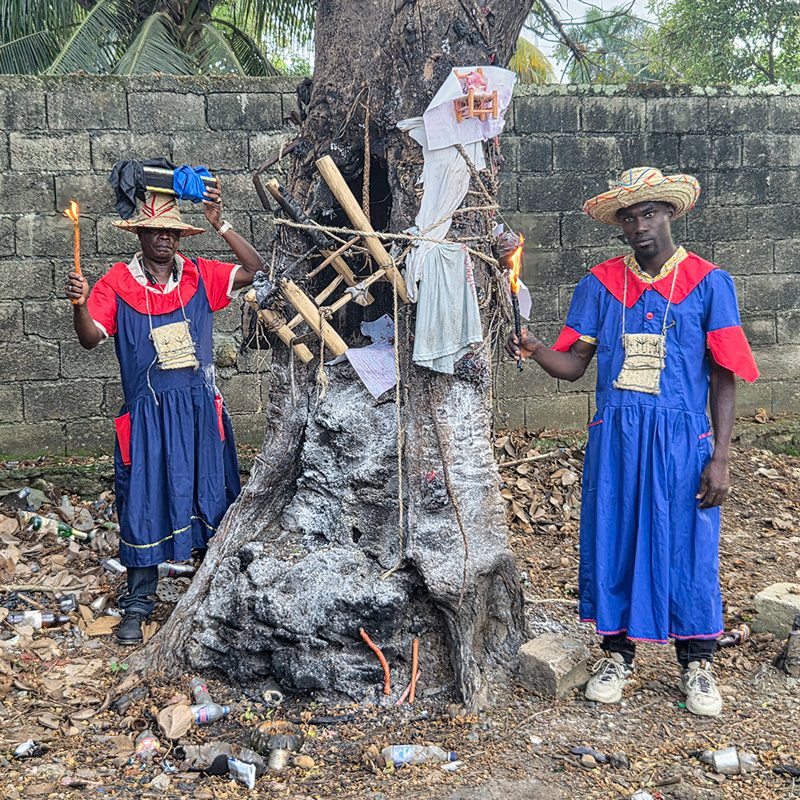
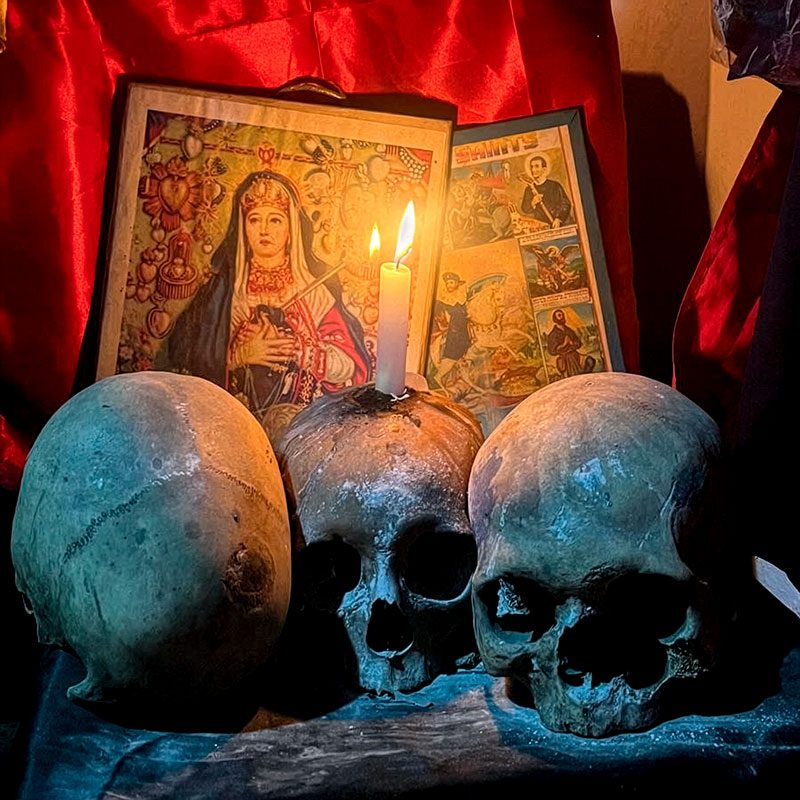
One of the central moments of the anthropological trip to Haiti will be participation in Fèt Gede, celebrated every 2 November. This important ceremony honours the dead and the Gede spirits, linked to death, fertility and protection. For several hours, we will witness songs, dances and rituals where West African heritage blends with Catholic symbols. In addition, we will understand how Haitian Vodou approaches memory, mortality and the relationship with ancestors. In this way, the route will offer a deep insight into one of the Caribbean’s most distinctive religious expressions.

Fort Liberté: independence and popular music
The journey will continue towards Fort Liberté, a coastal town of enormous historical value. It was here that the Declaration of Independence of Haiti was signed in 1803. We will visit former colonial buildings, the French fort and the fishermen’s quarter. Likewise, we will learn about the tradition of troubadour musicians, born after independence and influenced by exchanges with Cuba. Therefore, the anthropological trip to Haiti will also reveal the country’s musical and political dimension.


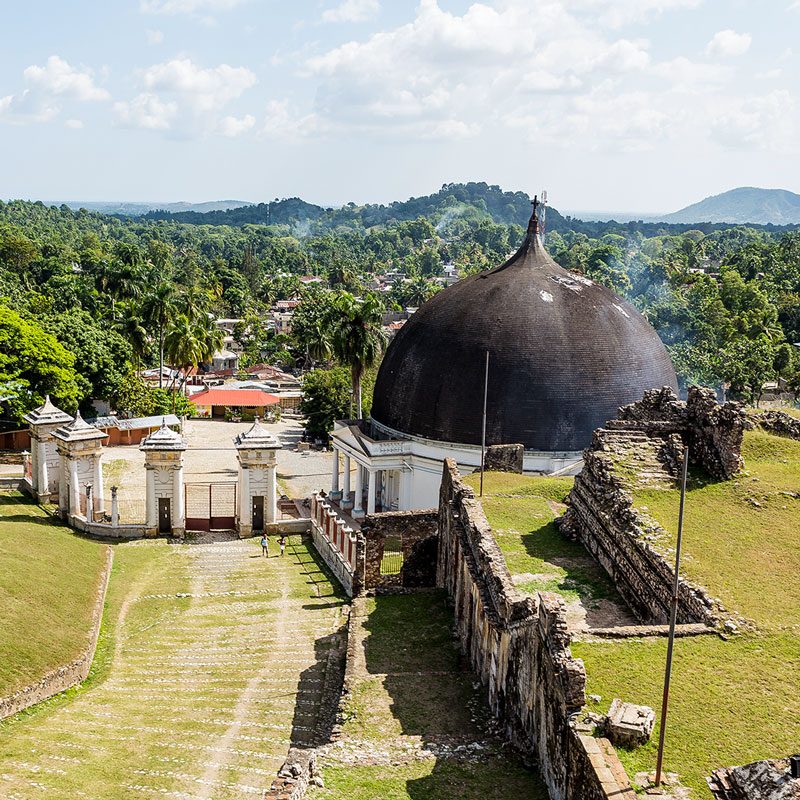
Milot, Sanssouci and the Citadelle Laferrière
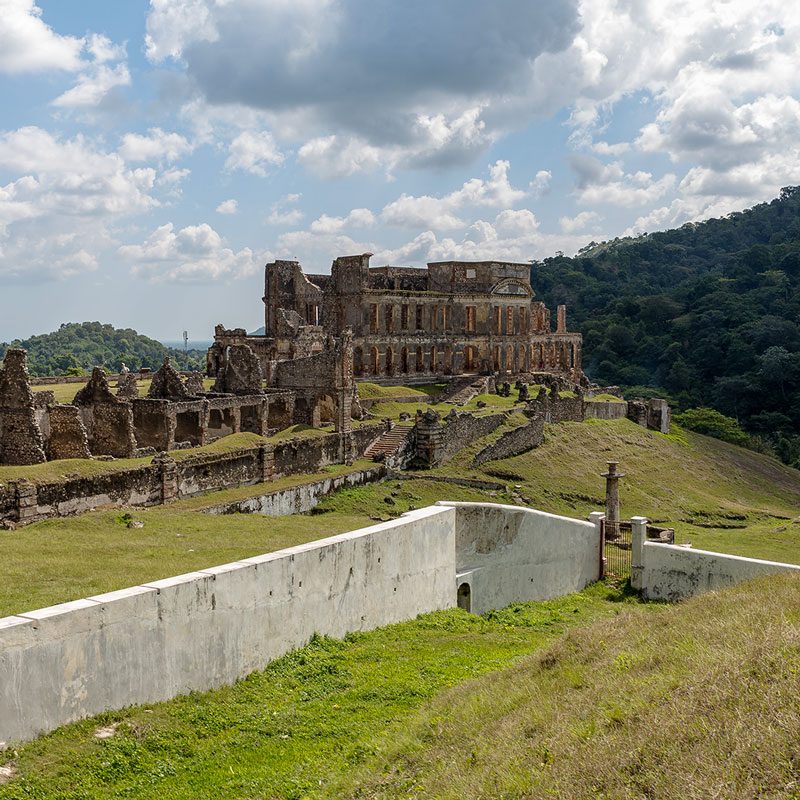
During this stage of the anthropological trip to Haiti, we will enter one of the most impressive monumental complexes in the Americas. In Milot, we will visit the ruins of Sanssouci Palace, the former residence of King Henri Christophe. Afterwards, we will ascend to the Citadelle Laferrière, the largest fortress on the American continent. From its summit, we will enjoy extraordinary views and understand its role as a symbol of freedom and independence. In addition, a descendant of the former Haitian royalty will accompany us during part of the visit.

Maroon-Taíno communities and ethnomusicology
Very close to the Citadel, the anthropological trip to Haiti will bring us to a Maroon-Taíno family. Its members descend from escaped slaves and indigenous Taíno populations. With them, we will discover traditional bamboo instruments and listen to music passed down through generations. Thus, the route will incorporate a valuable ethnomusicological and community dimension.


Taíno petroglyphs and indigenous memory
In the hills of Sainte Suzanne, we will explore one of the most important archaeological sites in northern Haiti. There, we will see Taíno petroglyphs featuring human figures, animals and geometric symbols. Before the visit, a local shaman will perform a ritual to access the sacred site. In addition, we will reflect on the indigenous legacy still present in words such as hammock, canoe and hurricane. In this way, the anthropological trip to Haiti will connect the pre-Columbian past with contemporary spirituality.
Bois Caïman and Plaine du Nord: living spirituality
The anthropological trip to Haiti will then take us to Bois Caïman, a fundamental place in the national imagination. This is considered the symbolic starting point of the Haitian Revolution of 1791. We will visit the sacred cave and witness a Vodou ritual linked to the resistance of the Haitian people. Later, in Plaine du Nord, we will discover the famous sacred pool, where Christian devotees and Vodou practitioners come in search of healing. For this reason, this phase of the journey will help us understand the spiritual force that runs through Haitian society.


Caribbean, gastronomy and end of the journey
We will also enjoy moments of relaxation by the Caribbean Sea, with time at Cormier Beach and local gastronomy based on fresh fish, rice, plantain and Creole cuisine. Overall, the anthropological trip to Haiti offers a complete immersion in one of the continent’s most powerful cultural territories. Revolutionary history, popular religiosity, African heritage and indigenous roots will come together in a unique experience.
© Photos by KESS Photography and Xavi de las Heras taken during a trip to Haiti.
► Download the itinerary for this anthropological trip to Haiti
Click on the button below to easily access the download form for the itinerary of this anthropological trip to Haiti.






 ES
ES

