
 Trip to the Ivory Coast from 26 Dec. 2026 to 4 Jan. 2027 / From 2,995€
 Discover the highlights of this anthropological trip to the Ivory Coast
Masks, ceremonies and living spirituality
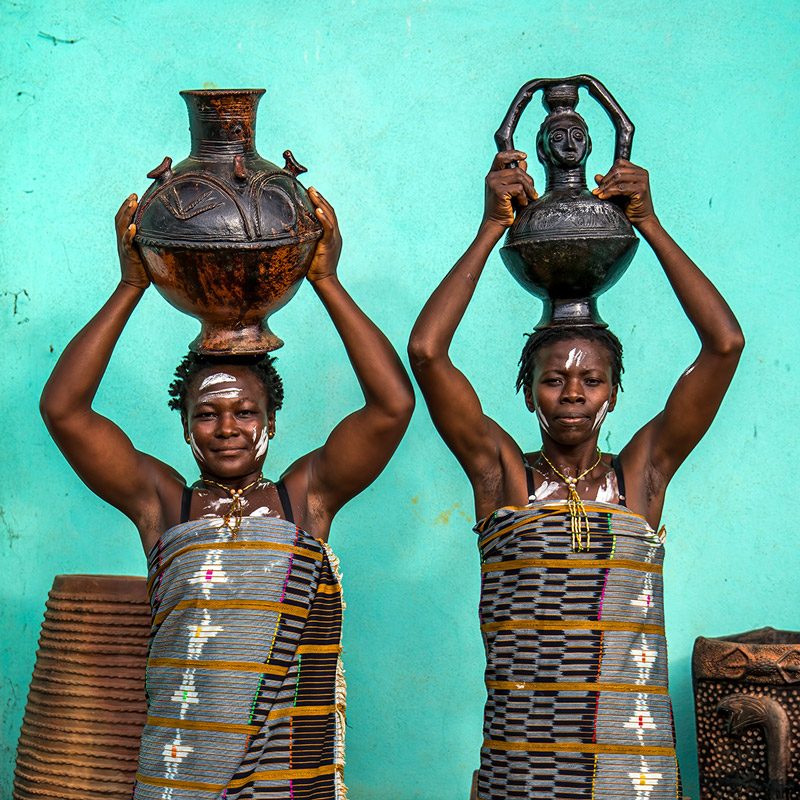
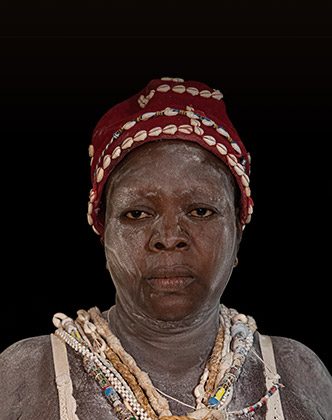
Komian: priestesses and sacred forest
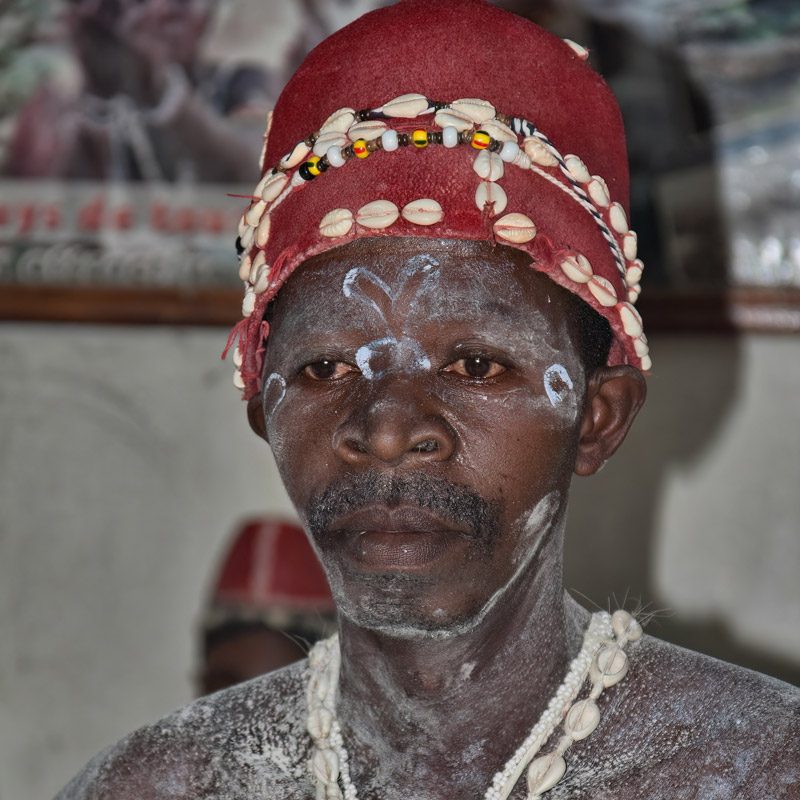
The anthropological trip to the Ivory Coast will begin in the heart of Akan country. We will enter a matrilineal society where the figure of the king, the sacred forest and ancestral cults still hold great importance. This first contact will help us understand the social and political foundations of the Anyi world. There, we will approach the spiritual universe of the Komian priestesses. We will visit their temple and take part in a pilgrimage to the sacred forest. In addition, we will witness a ritual linked to ancestral spirits. Thus, this first stage will reveal the relationship between power, territory and traditional religion.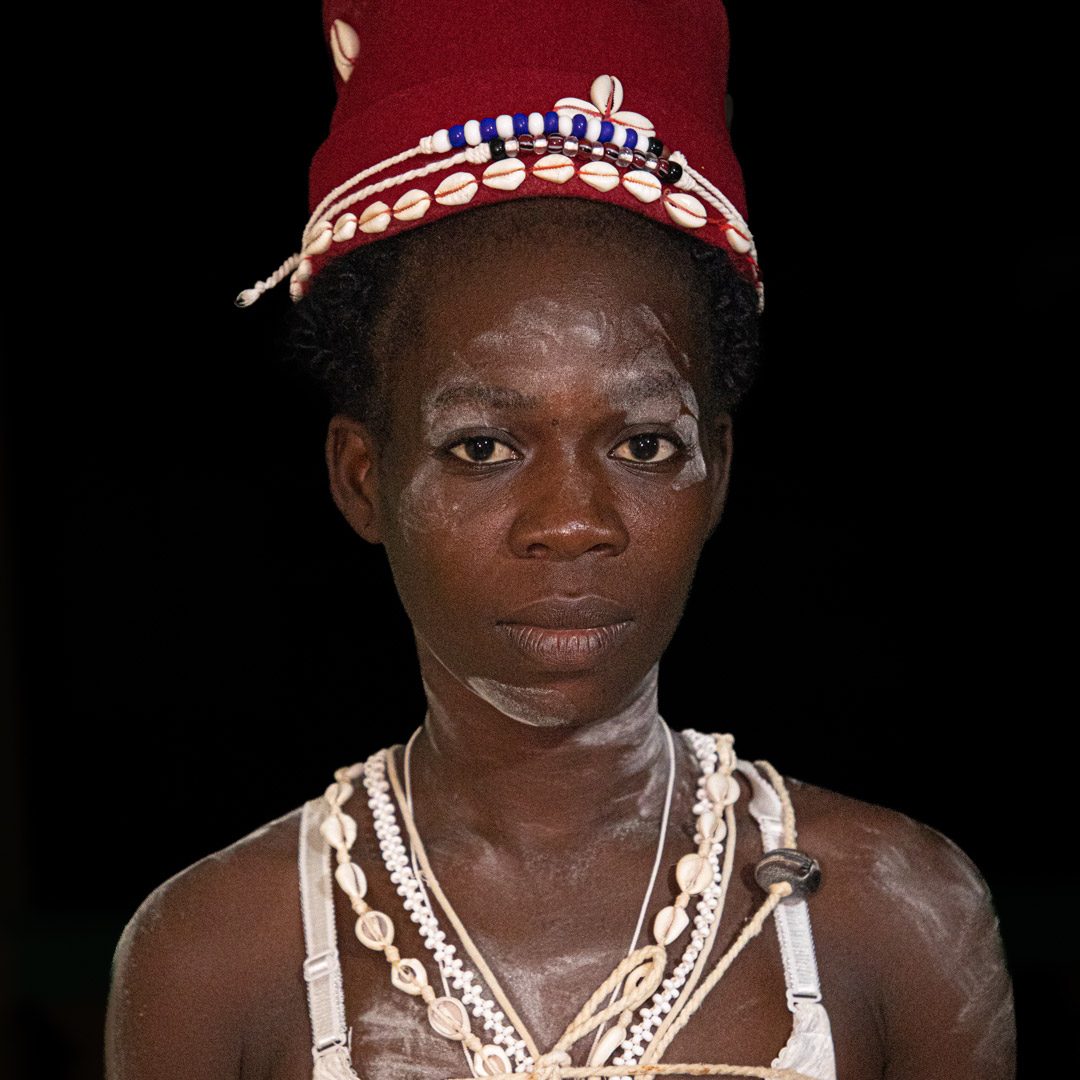
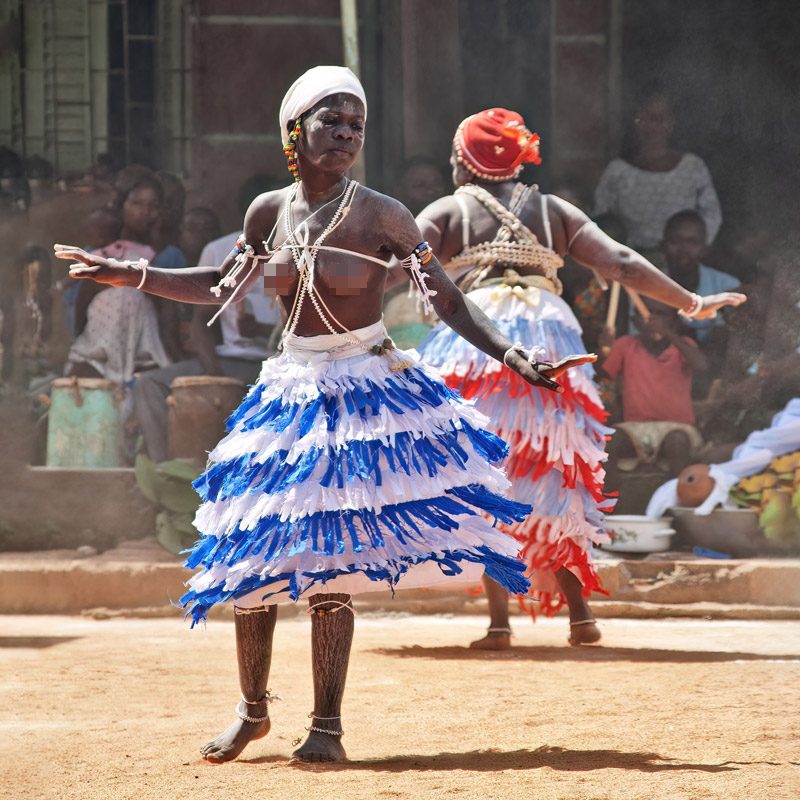
Zaouli: elegance and ceremonial rhythm
The route will culminate with the Zaouli masquerade, one of the most famous dances in West Africa. Performed by men representing female spirits, it stands out for its extraordinary rhythmic precision. In this way, the anthropological trip to the Ivory Coast will conclude with one of the continent’s great performing treasures.
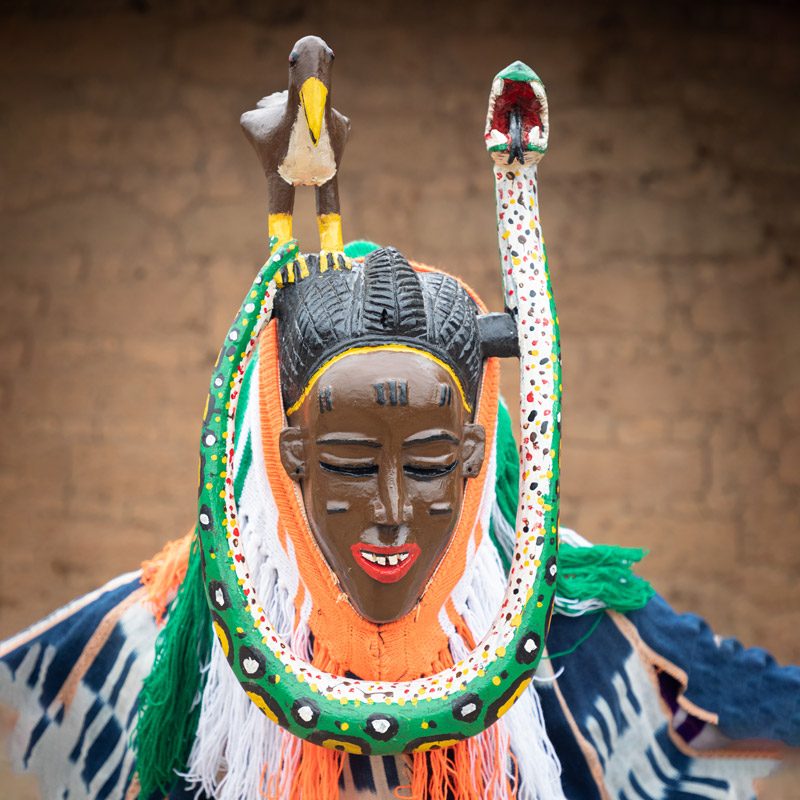
Mythical ancestor and the serpent sect
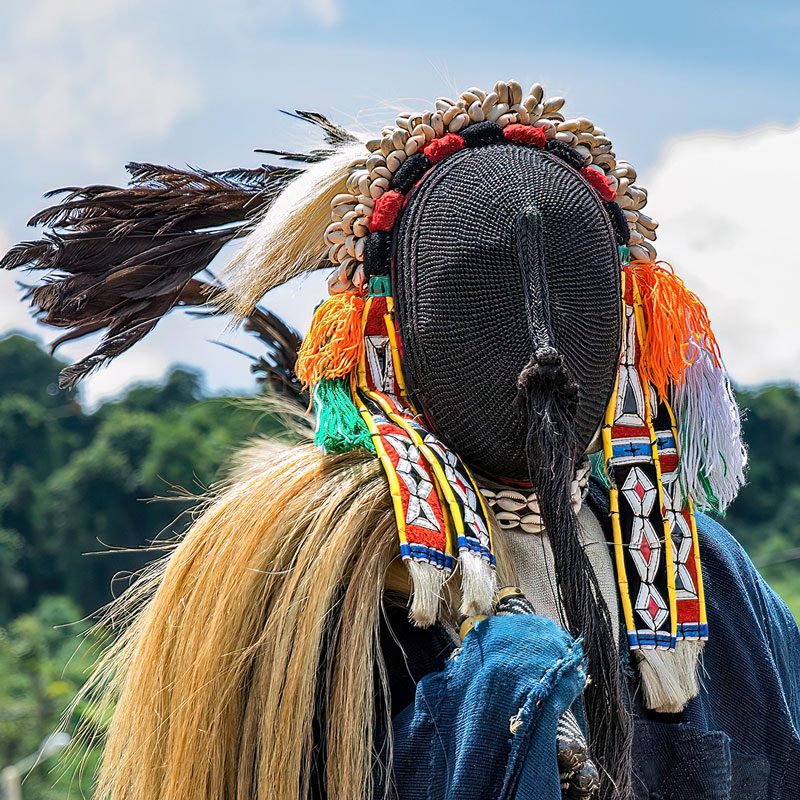
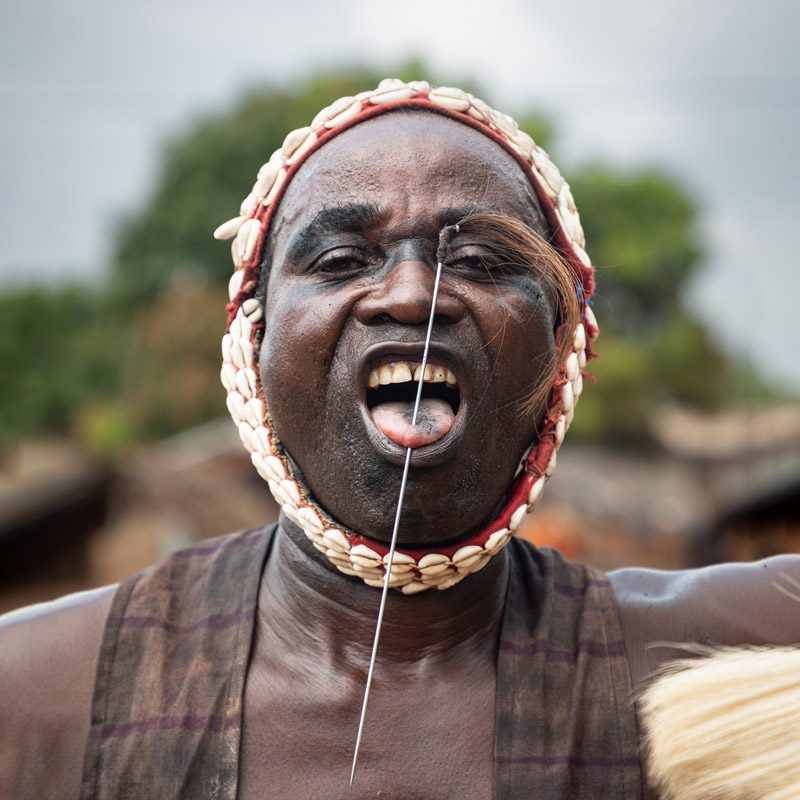
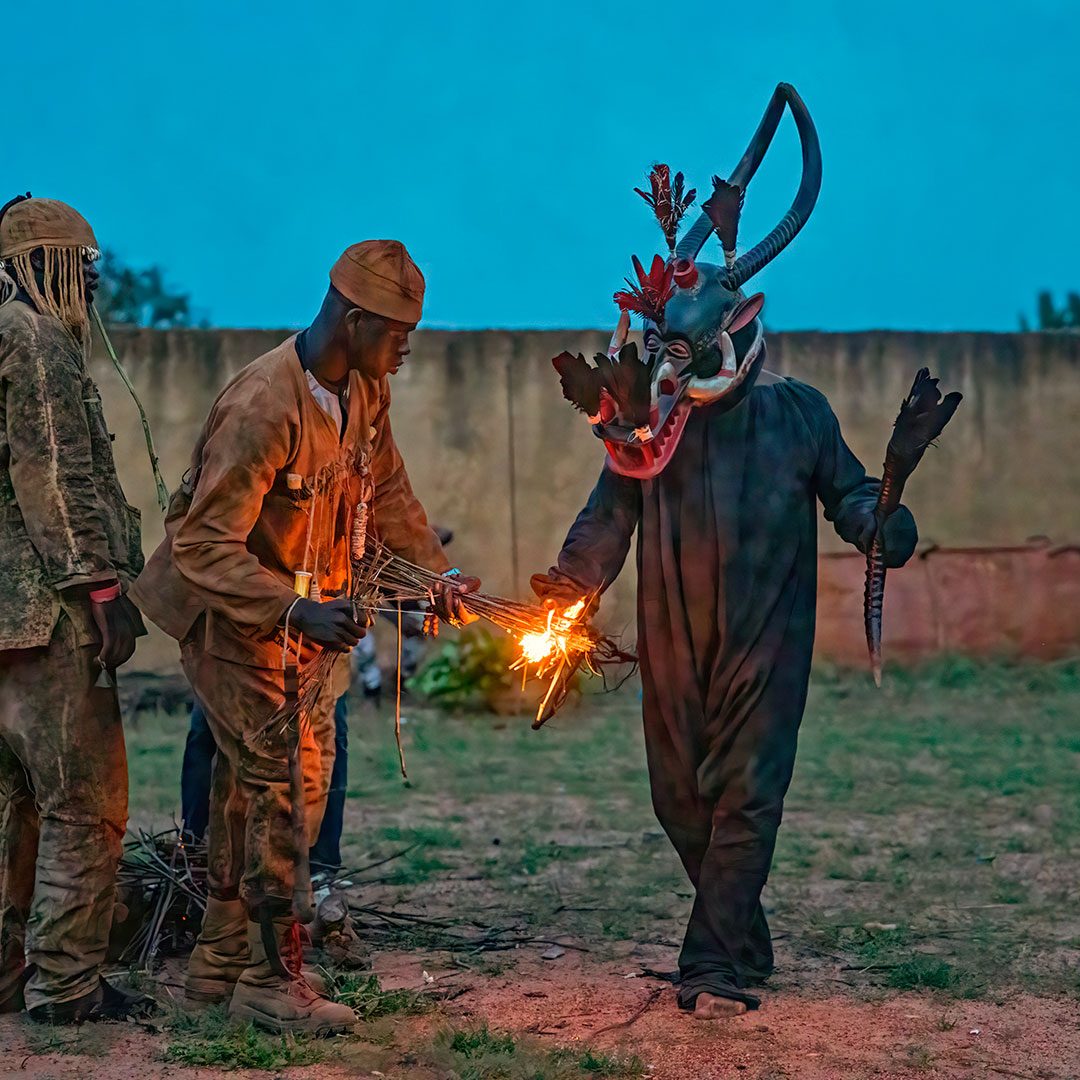
Another outstanding day of the anthropological trip to the Ivory Coast will take us to Dan communities. There, we will attend a masquerade dedicated to a mythical ancestor. Afterwards, we will discover the so-called serpent sect, a traditional association linked to restricted knowledge. In this way, the journey will offer a deep insight into little-known symbolic systems.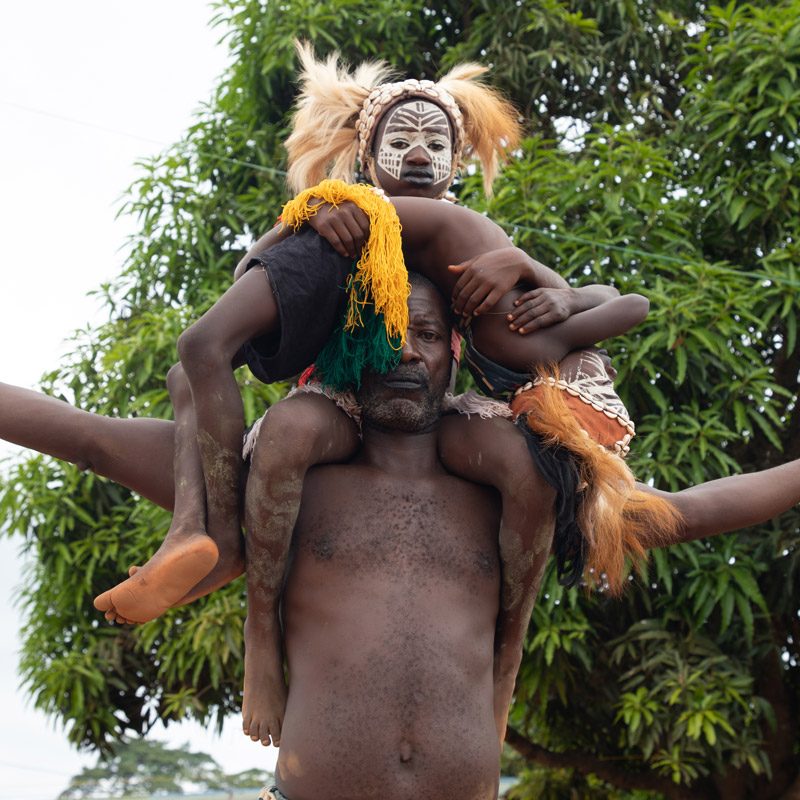
Leopard dance and the Wambelé ceremony
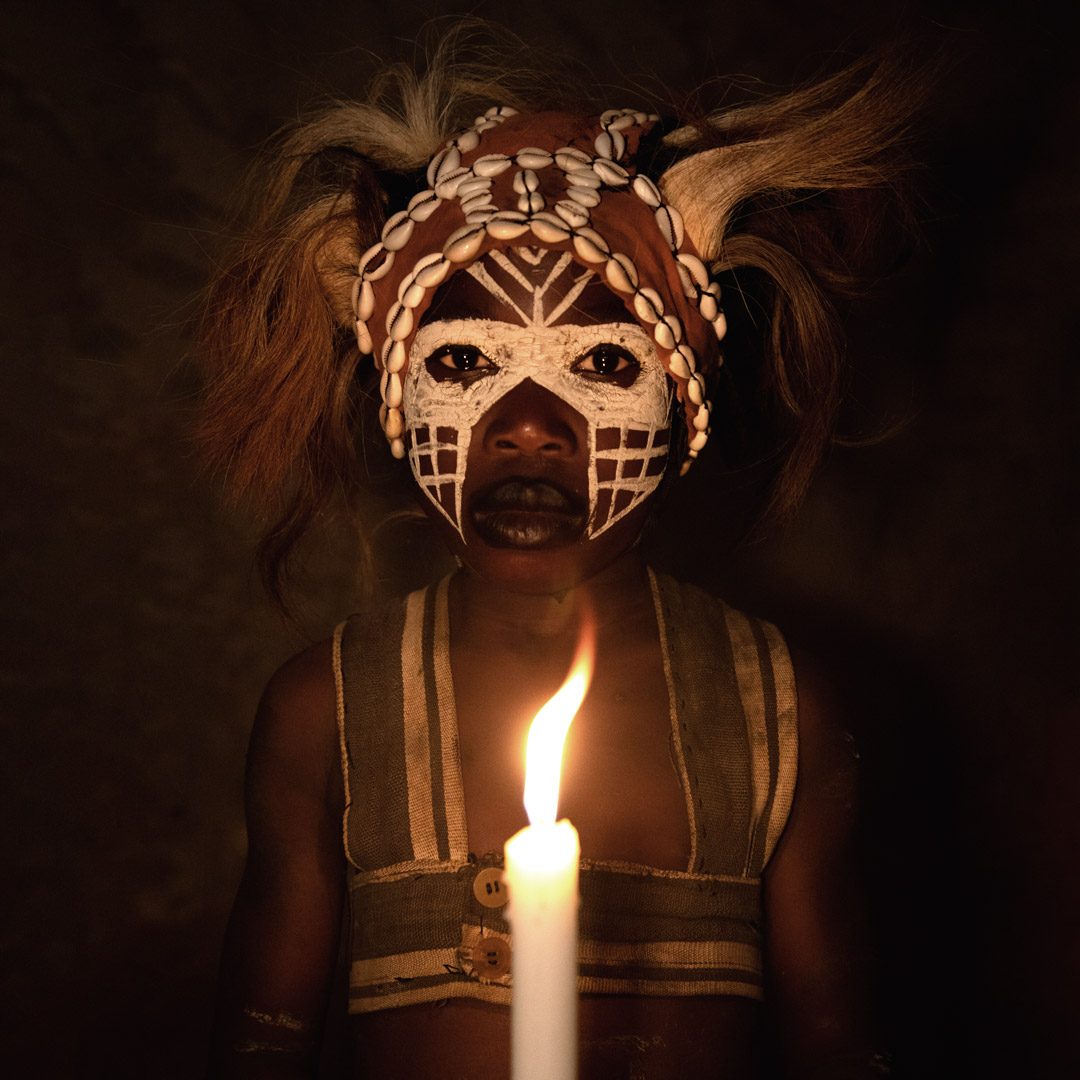
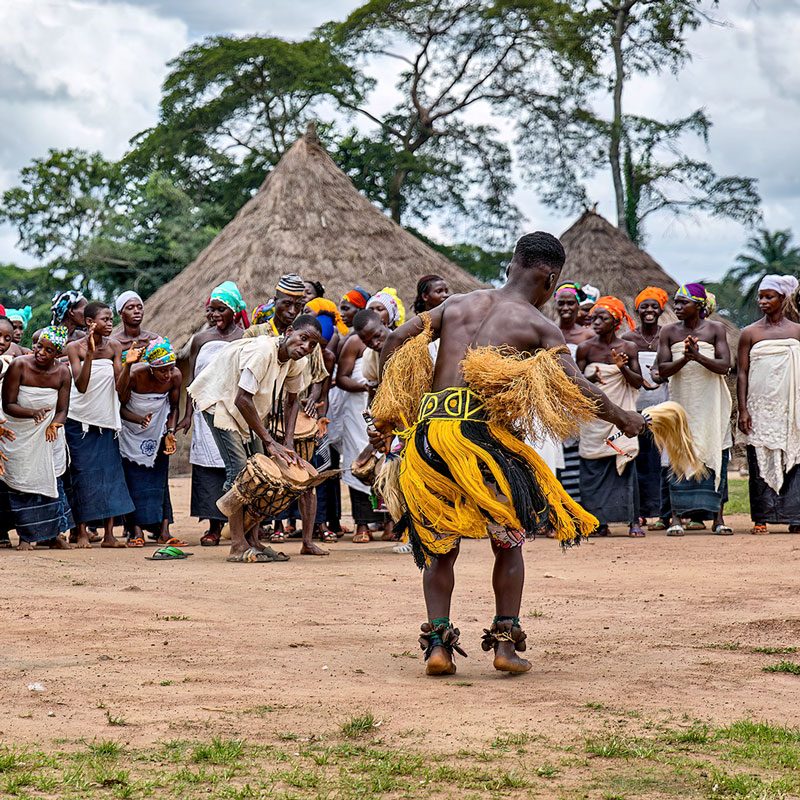
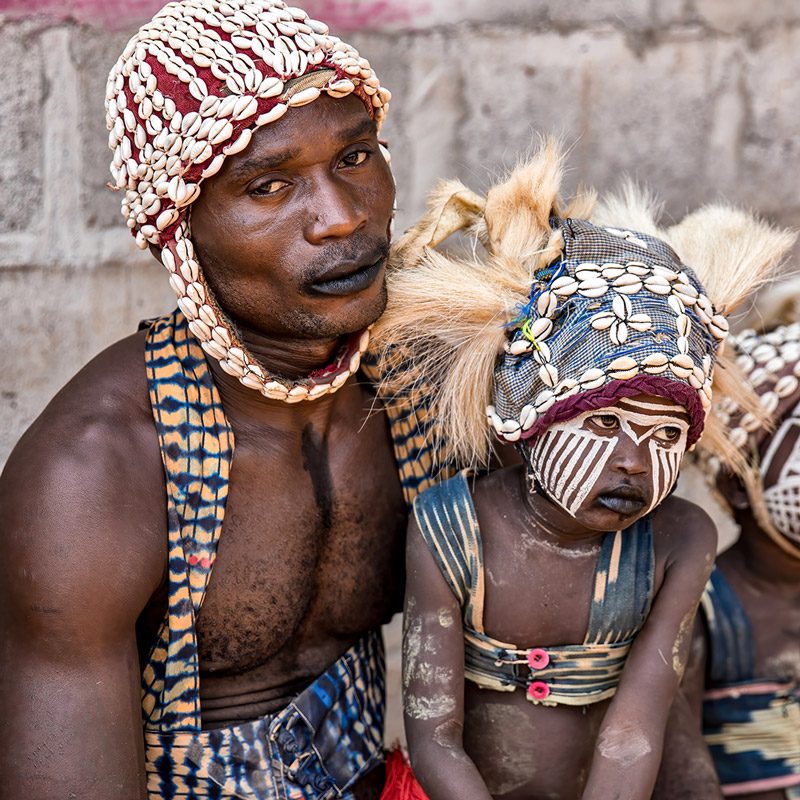
In the north, we will explore the Senufo world, where we will experience some of the most intense moments of the journey. On the one hand, we will witness the famous leopard dance, associated with strength and prestige. On the other, we will attend the Wambelé initiation ceremony. There, we will see buffalo-style masks, symbolic rituals and the presence of the Dozo hunters. In addition, we will meet weavers, blacksmiths and custodians of sacred spaces. Likewise, we will see how art, religion and social organisation form an inseparable whole. Therefore, the anthropological trip to the Ivory Coast will showcase traditions that remain fully alive.

Goli dance in Gbomi territory
During the anthropological trip to the Ivory Coast, we will attend the celebrated Goli mask dance. This ceremony will take place in Konde Yaokro, among the Gbomi minority, a group historically integrated into the Baule sphere. Beforehand, we will speak with traditional authorities, discover textile techniques and learn about their historical journey. We will also see how they continue to preserve their own identity traits.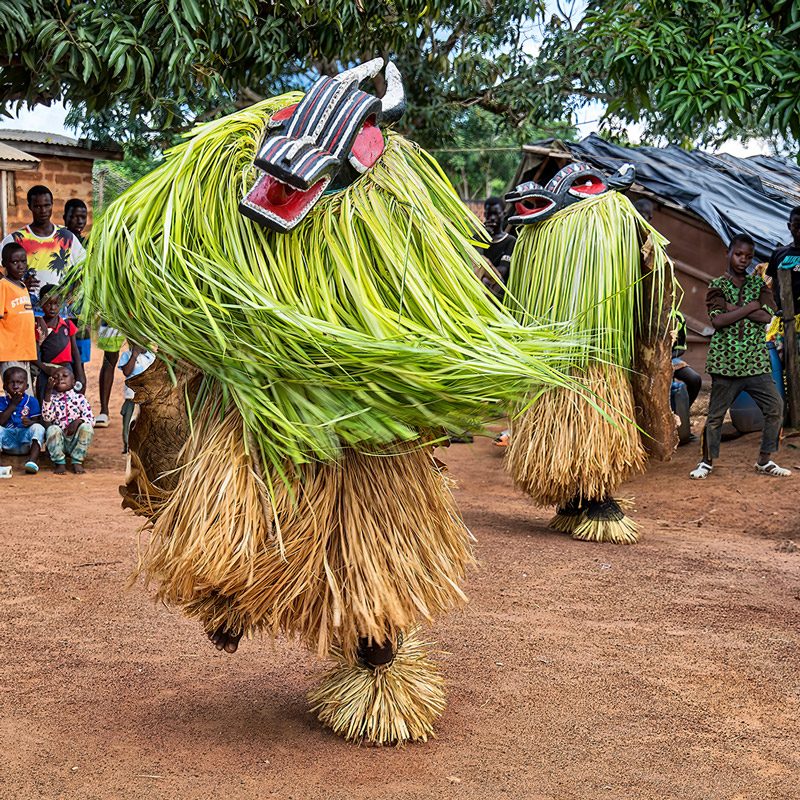
Guegbrin and Guekouena in the mountainous west
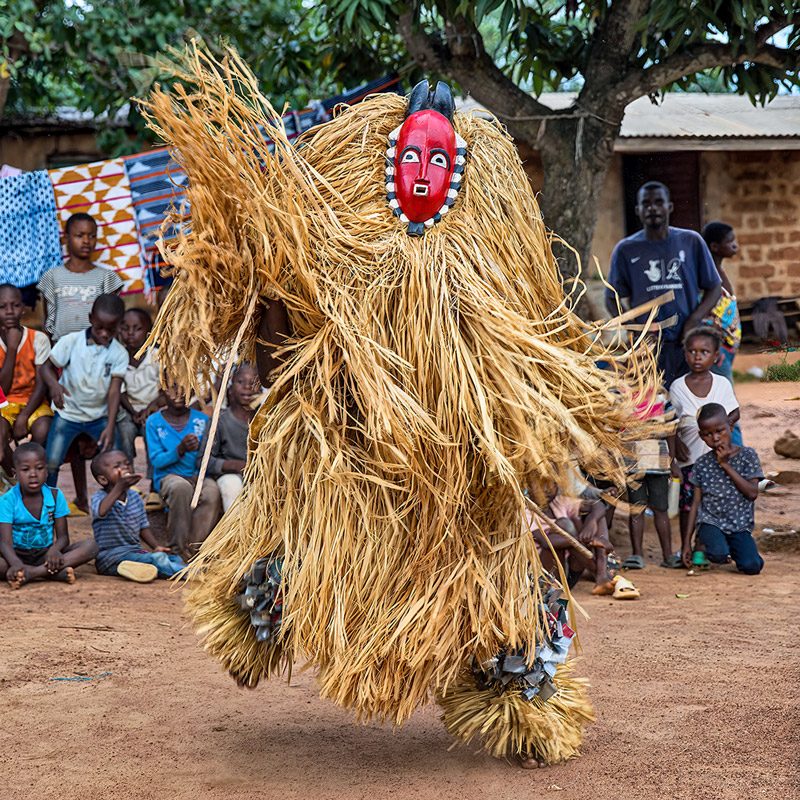
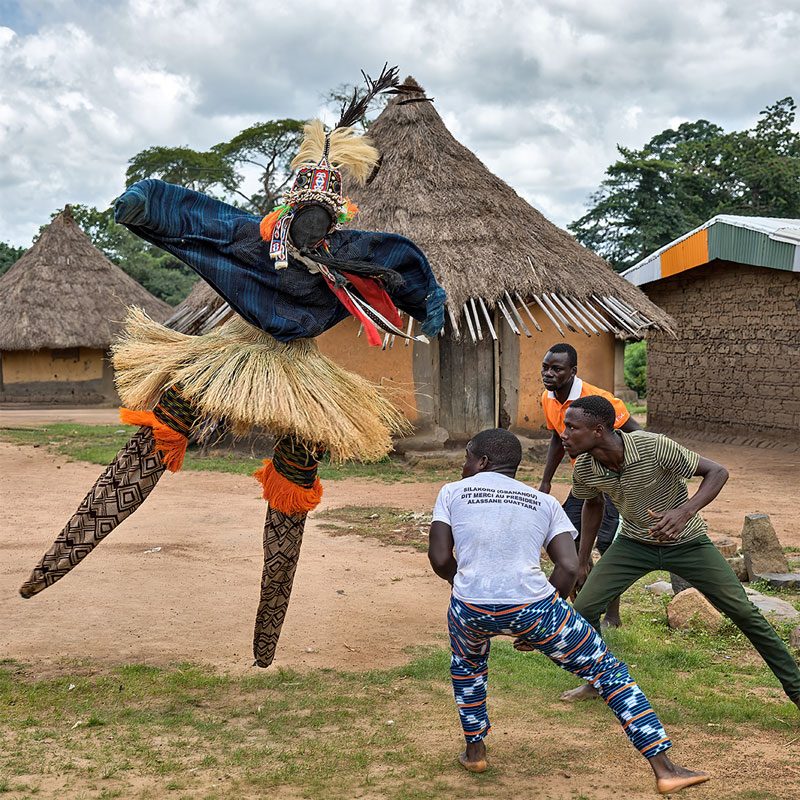
Later, we will travel towards the region of Man. In Yakuba territory, we will witness the Guegbrin dance, performed on stilts. We will also attend the Guekouena masquerade. Both expressions bring together local history, spirituality and ceremonial aesthetics. In addition, we will discover traditional sacred houses preserved by the community.

Other ethnographic encounters
Baule kingdom and traditional authority
The anthropological trip to the Ivory Coast will also include encounters with Baule communities. We will visit a royal village and learn about its structures of authority. Thus, we will understand the weight of tradition in contemporary life.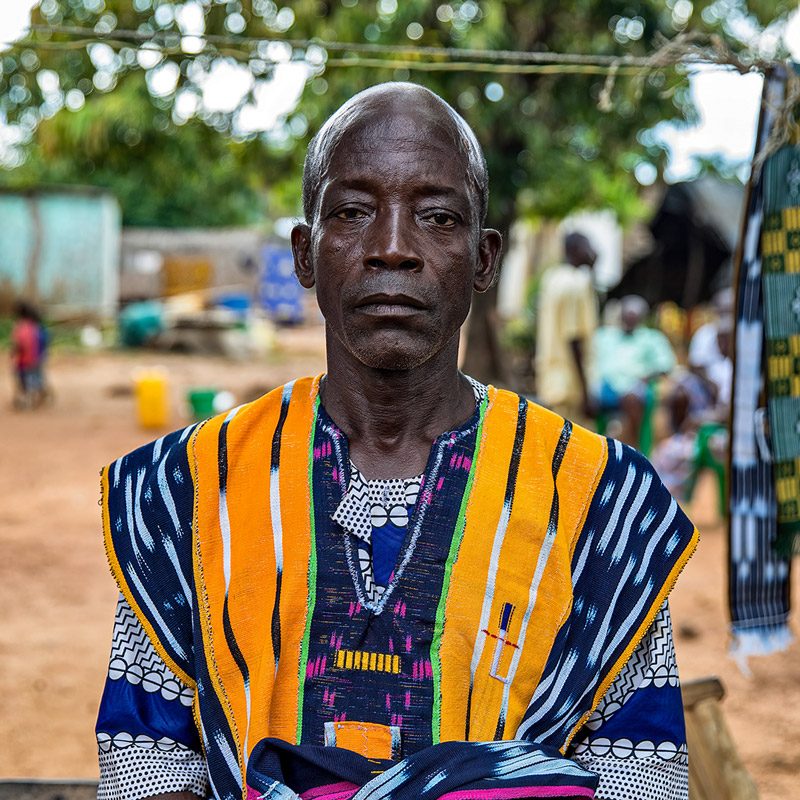
Fulani and life on the move
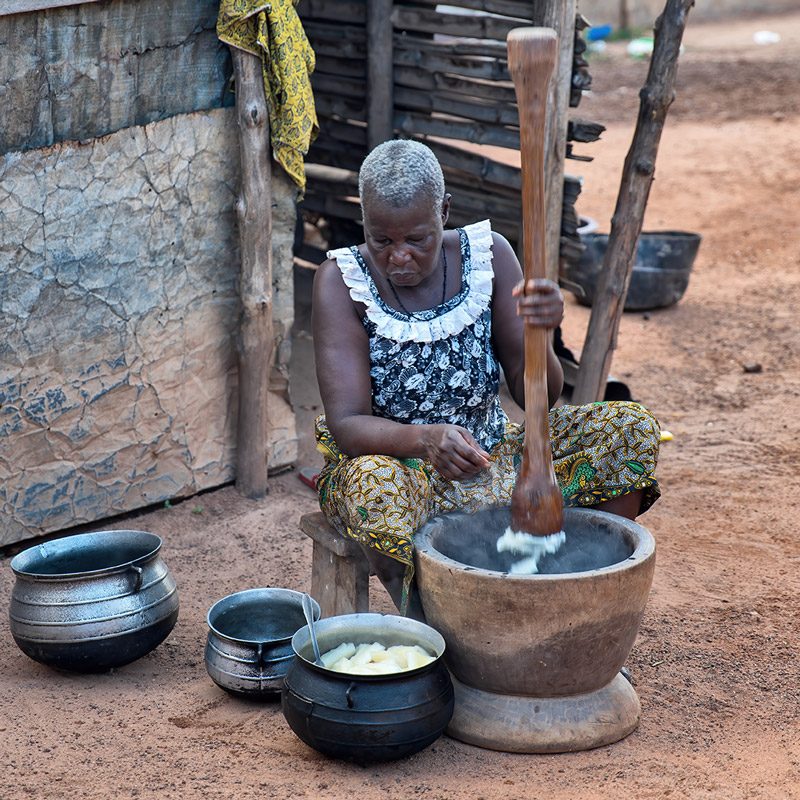
During one stage of the route, we will pass through a Fulani village. This encounter will allow us to observe ways of life linked to mobility, pastoralism and regional exchange.

Historic cities and territories of the country
The anthropological trip to the Ivory Coast will also travel through some of the country’s main urban and historic centres. We will begin in Abidjan, the great economic capital and international gateway. There, we will visit the cathedral, the national museum and the emblematic Pyramid building. Thus, we will understand the role of cocoa and modernisation in recent history. Afterwards, we will head to Yamoussoukro, the political capital of the Ivory Coast. In this city, we will discover its monumental basilica and the symbolic legacy linked to national independence. The route will continue to Niofouin, a sacred Senufo town that houses ancient temples dedicated to the ancestors. This site will allow us to explore the spiritual dimension of the north in greater depth. Next, we will reach Odienné, a historic Muslim city where we will stroll through the potters’ quarter and admire its great Sudano-Sahelian-influenced mosque. In this way, the anthropological trip to the Ivory Coast will connect major cities, traditional villages and ceremonial centres. Therefore, the journey will offer a broad vision of the country, shaped by cultural, religious and historical diversity.


An anthropological trip to understand the Ivory Coast from within
Overall, the anthropological trip to the Ivory Coast offers an exceptional immersion into one of the most culturally diverse countries in West Africa. We will not only visit emblematic places. We will also interpret rituals, memories and contemporary ways of life. For this reason, this route is ideal for travellers interested in anthropology, African religions and living cultures.
© Photos by Aníbal Bueno and Jordi Zaragozà Anglès taken during a tribal trip to the Ivory Coast.
► Download the itinerary for this anthropological trip to the Ivory Coast
Click on the button below to easily access the download form for the itinerary of this ethnographic trip to the Ivory Coast.

 ES
ES

