
Kok-boru is one of the most representative traditional sports of Kyrgyzstan and Central Asia as a whole. It is an equestrian competition in which two teams of riders compete to gain possession of a freshly slaughtered goat carcass and carry it into a scoring area. At first glance, kok-boru may seem striking because of its roughness, but to understand it, it must be viewed within the nomadic culture of the region.
The origins of kok-boru date back to the ancient herding societies of the Central Asian steppes. For the Kyrgyz nomadic peoples, the horse has always been an essential tool for transportation, protecting livestock, and surviving in a demanding environment. Horsemanship is a daily necessity, and many equestrian games developed as a form of training to build strength, coordination, and skill.

Kok-boru combines speed, strategy, and exceptional horse control. Riders must handle their horses with precision while competing physically against opponents, attempting to seize the carcass and advance toward the scoring area. In addition to physical strength, the sport requires an extraordinary bond between rider and horse, as the two must function almost as a single unit.
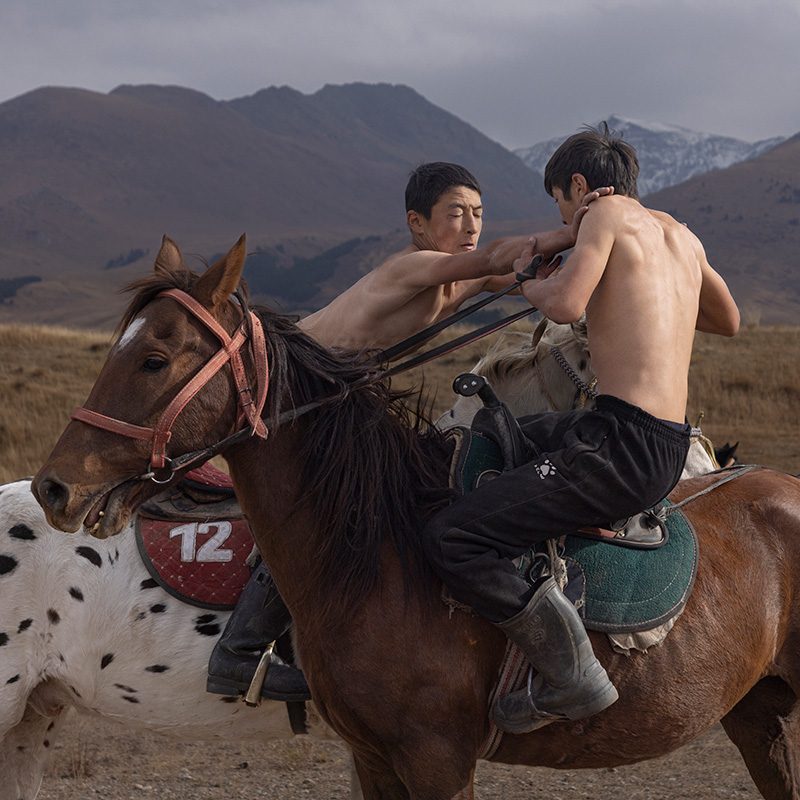
These kok-boru matches also have an important social dimension. They are held during festivals, community gatherings, and significant events, serving as meeting places for clans and local communities. The best riders are recognized for their skill and embody values associated with nomadic culture: endurance, courage, and mastery of horsemanship.

Although the sport is now practiced in a more organized way, with official rules and competitions, kok-boru still carries deep cultural significance. In Kyrgyzstan, it remains one of the most visible expressions of national identity and a way of preserving the country's connection to its nomadic heritage.

For travelers visiting Kyrgyzstan, attending a kok-boru match offers insight into an essential aspect of local culture: a society in which the horse is not only a means of transportation but also a central element of history, the economy, and national identity.
If you would like to experience kok-boru firsthand, Last Places has a scheduled ethnographic trip to Kyrgyzstan in September 2026, offering the opportunity to witness this extraordinary tradition within its authentic cultural setting. Alternatively, if you prefer greater flexibility, we can also organise a tailor-made trip to Kyrgyzstan, allowing you to discover the country's nomadic heritage at your own pace and according to your interests.
© Photos by Aníbal Bueno.


 ES
ES

