
 Trip to Brazil from 18 to 26 October 2027 / From 3,495€
 Discover the highlights of this ethnographic trip to Brazil
Kayapó indigenous community: ceremonies, body painting and life in the Amazon Rainforest
Welcome to the Kayapó community
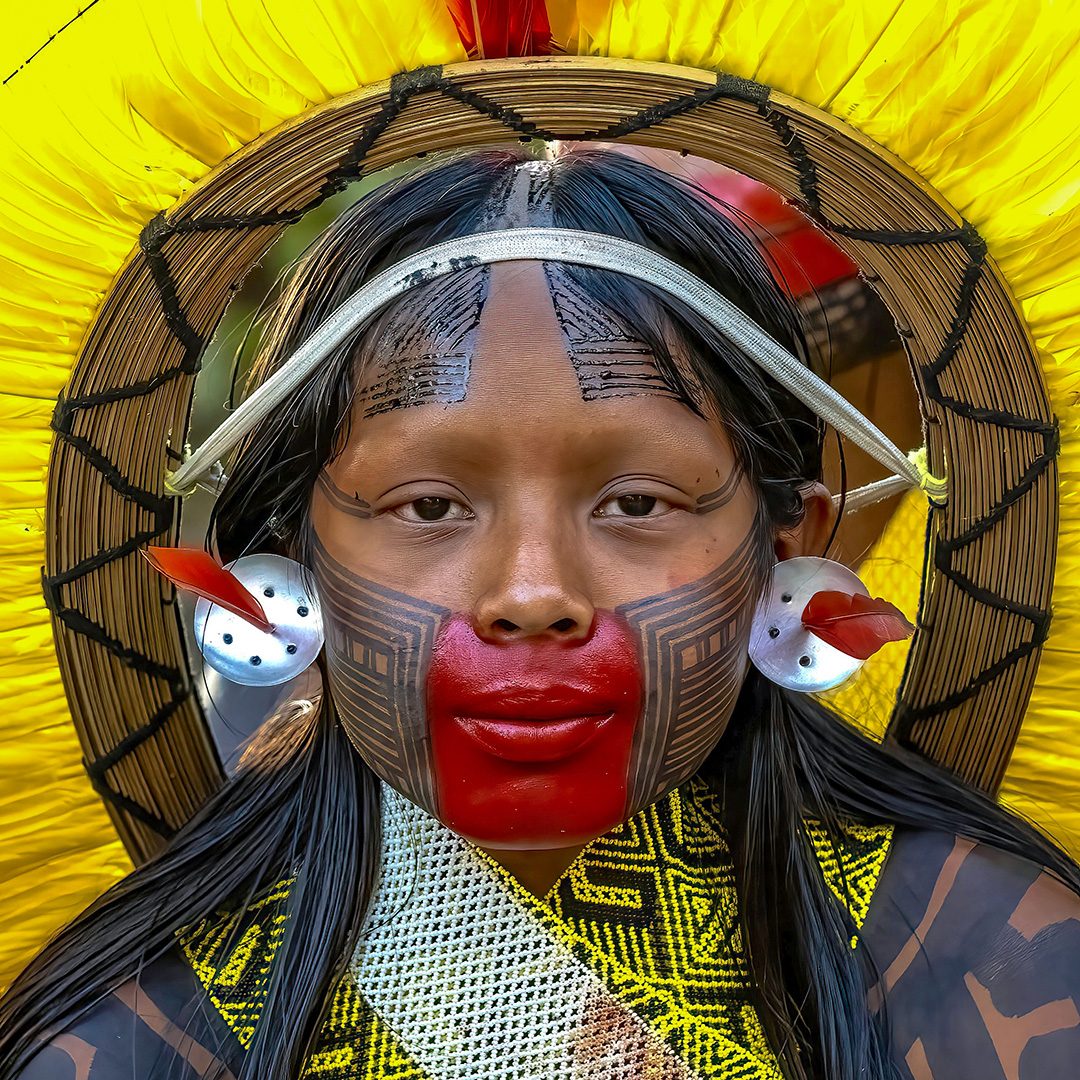
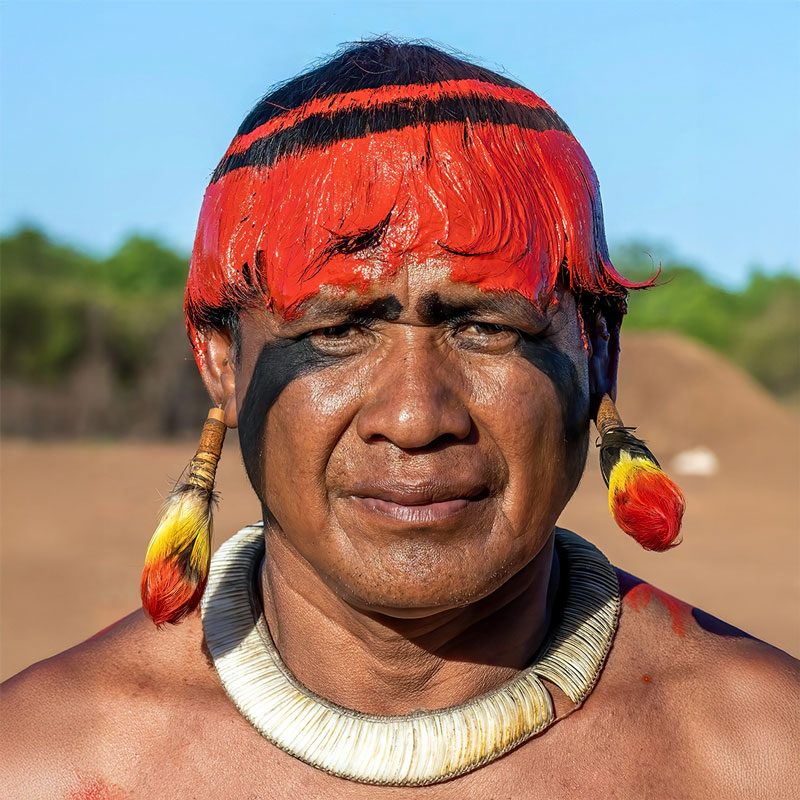
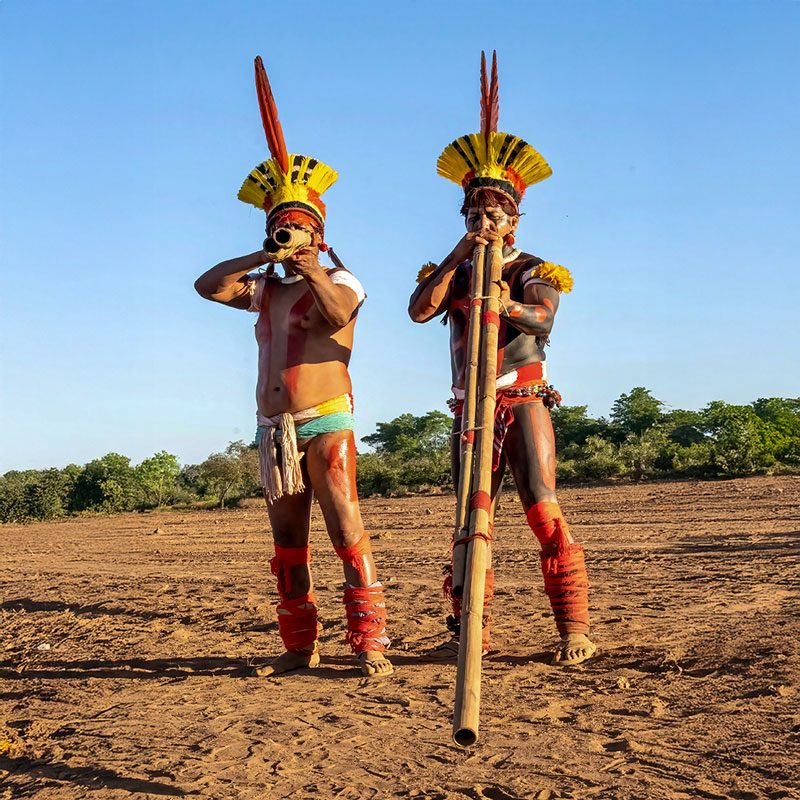
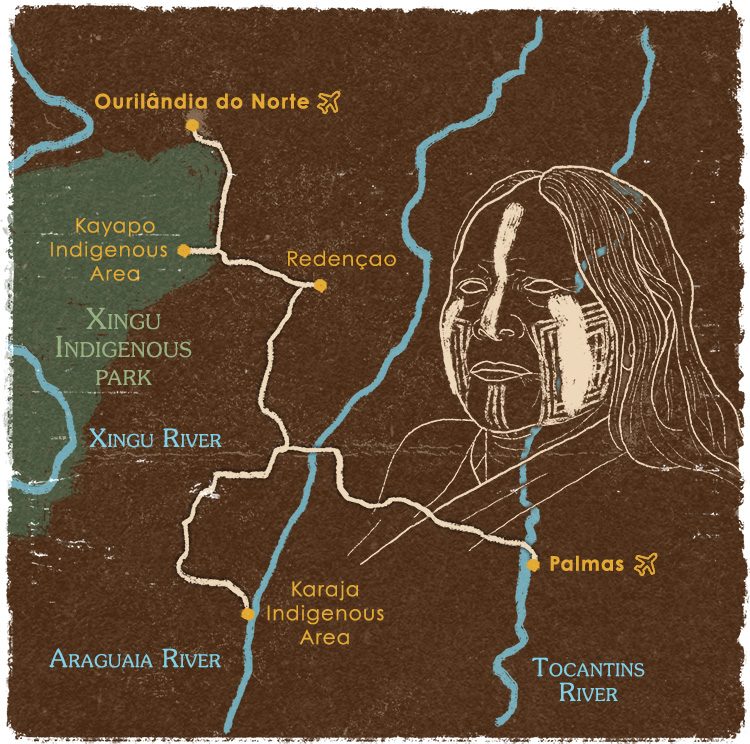
The ethnographic trip to Brazil will begin in the protected territory of the Kayapó people, also known as the Mebengokre. This community lives deep within the Amazon rainforest. They has preserved a remarkably strong cultural identity despite maintaining contact with Brazilian society since the late 1950s. We will also learn how they continue to defend their ancestral lands against pressure from cattle ranchers, illegal loggers and mining operations. Our journey to the village will include a scenic two-hour motorboat journey along Amazonian waterways. It will offer us a first glimpse of the remote environment in which the Kayapó live. Upon arrival, we will be welcomed by the village chief and the community elders. Following the introductions, we will gain an understanding of Kayapó social organisation and community customs. We will also attend a traditional welcome dance and admire the intricate body paintings worn by both men and women, one of the most distinctive expressions of their cultural identity.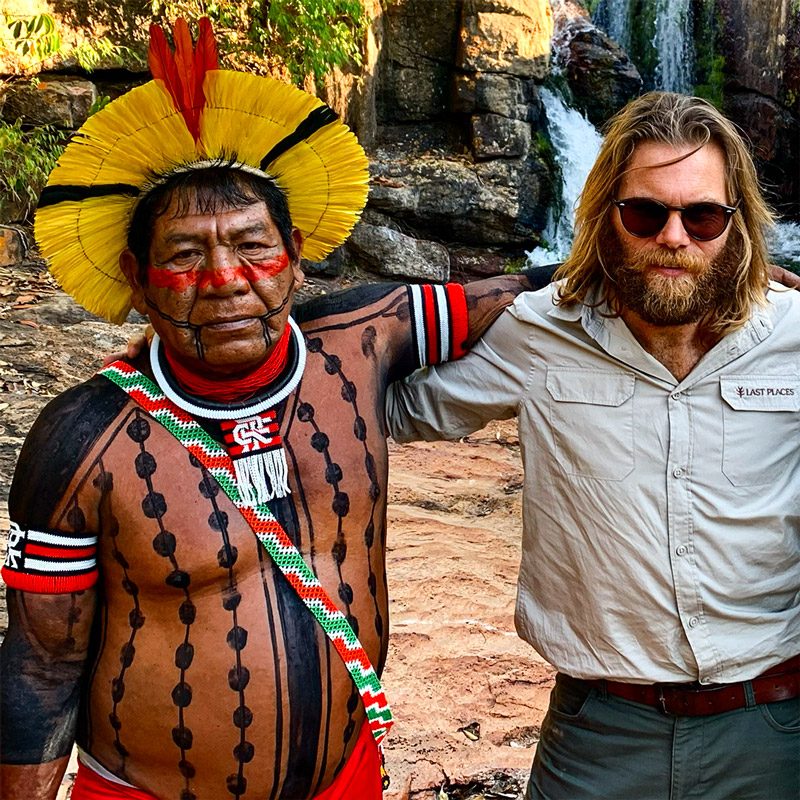

Ceremonies and daily life in the rainforest
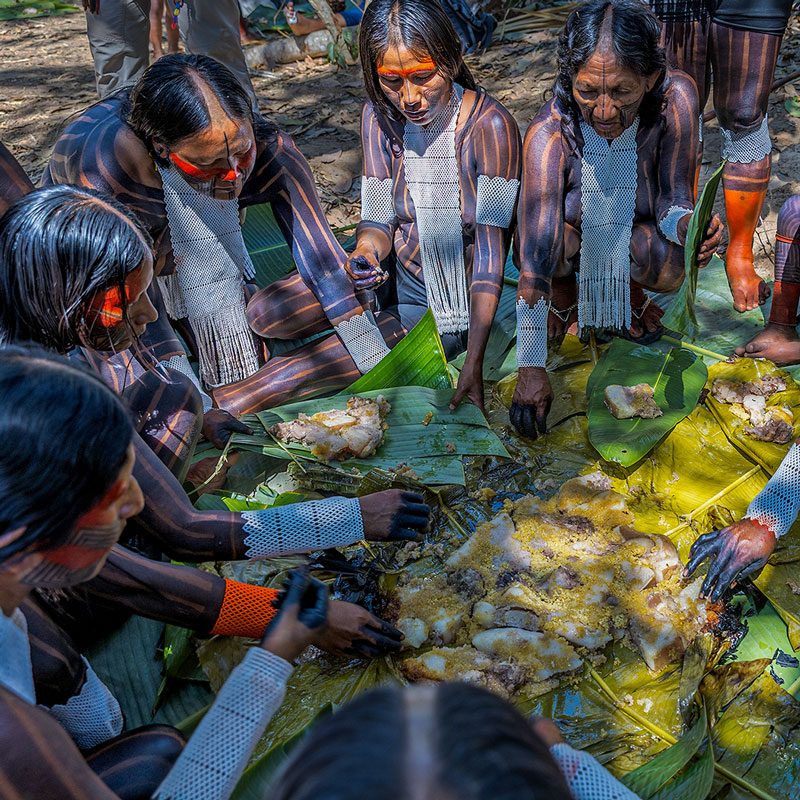
We will witness a ceremony connected with the naming of Kayapó children. This ritual is one of the most significant moments in community life and reflects the profound symbolic importance of family relationships and belonging within the group. During the ethnographic trip to Brazil, we will also accompany Kayapó women and children into the forest to observe how they gather food, firewood and medicinal plants. There, they will prepare a traditional meal using ancestral techniques, which we will share together. This experience will provide valuable insight into their intimate relationship with the Amazon ecosystem and their extensive knowledge of the rainforest's natural resources.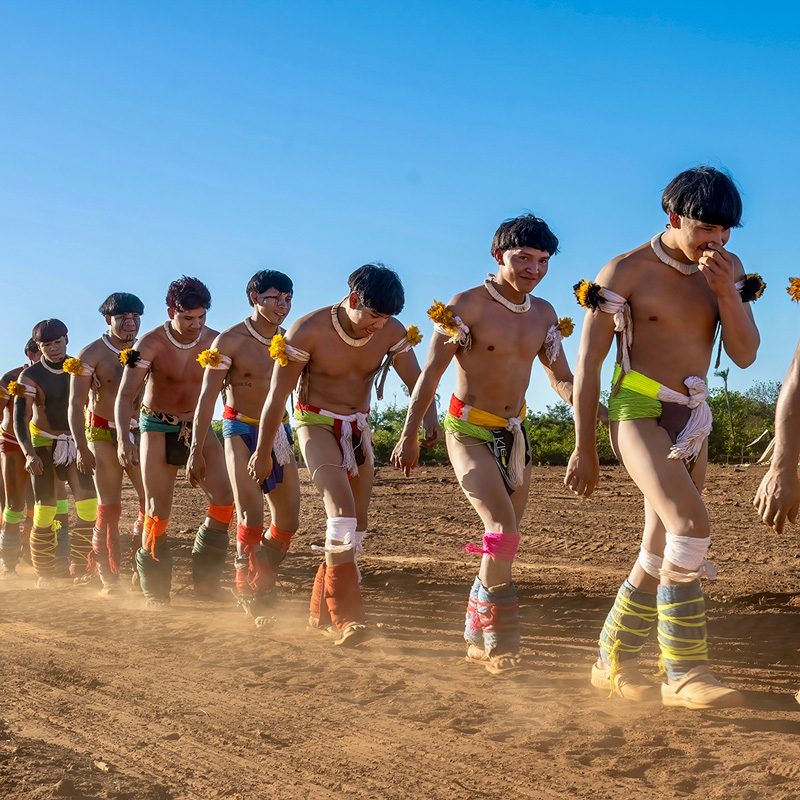
Body painting, hunting traditions and spiritual rituals
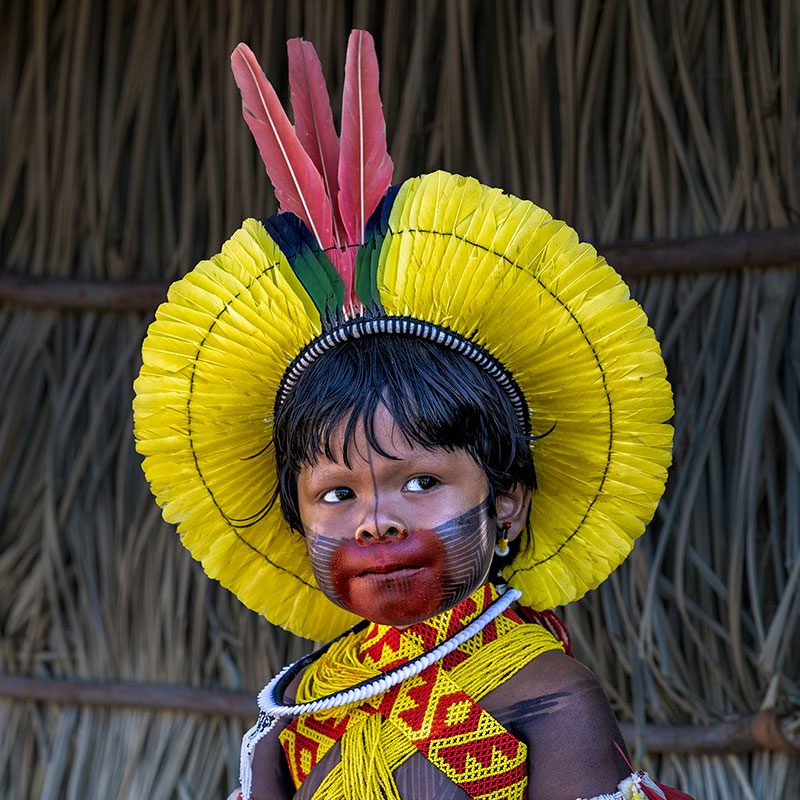
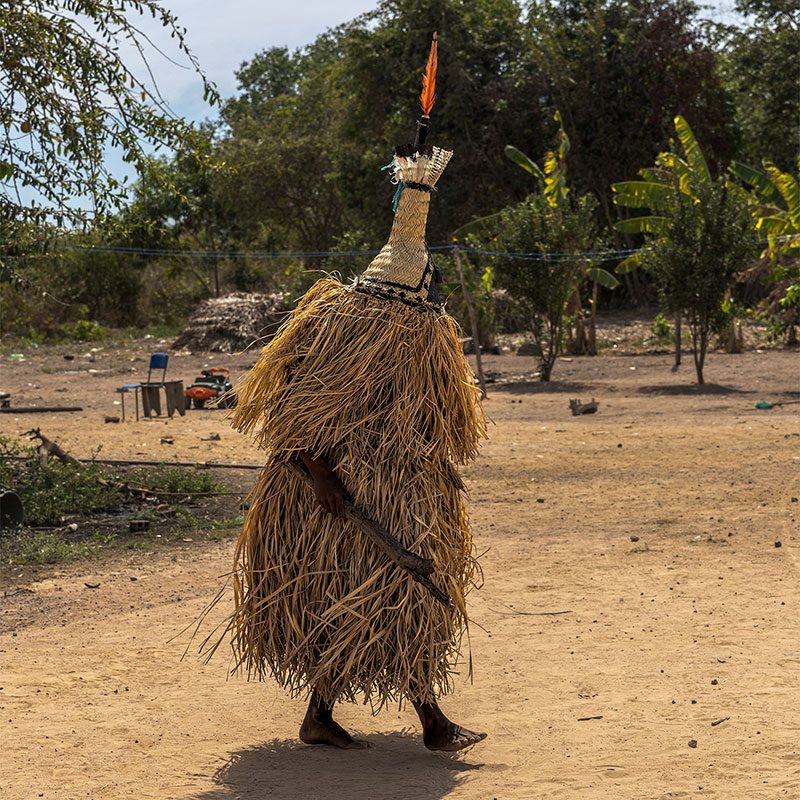
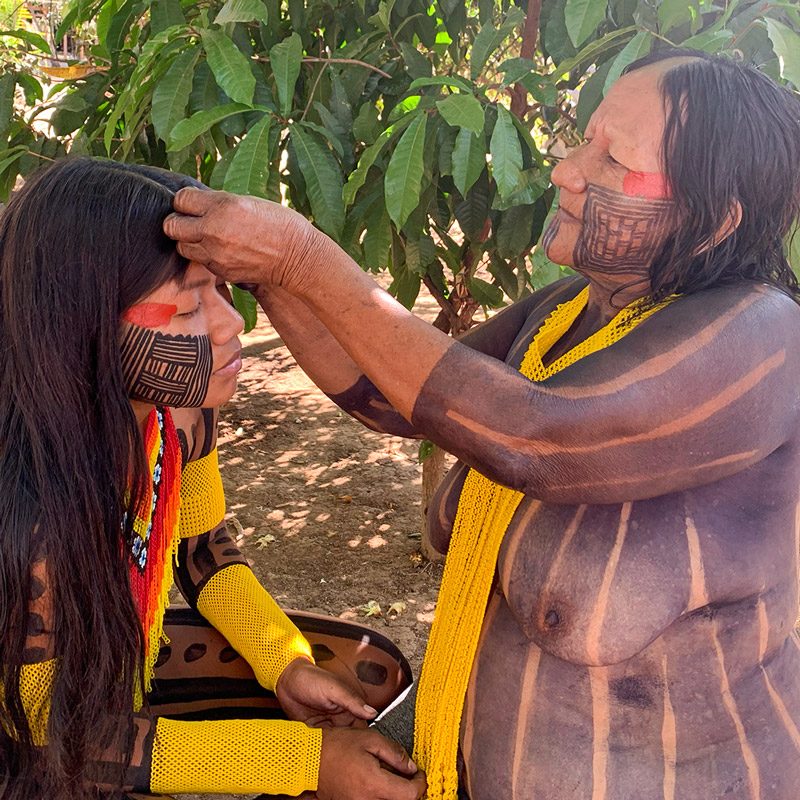
Later, we will attend a series of cultural demonstrations. We will observe traditional facial and body painting techniques, the characteristic Kayapó hairstyle, and the practice of lip piercing, all of which remain important elements of Kayapó identity. We will also enjoy a ritual dance performed around the fire, offering a deeper understanding of the ceremonial significance of these cultural expressions. Another of the highlights of the ethnographic trip to Brazil will be accompanying the men of the community into the forest. Although this will not be an actual hunting expedition, we will learn about the traditional hunting techniques they have developed and the way they interpret animal behaviour. We will see how they cover their bodies with natural black pigments to camouflage themselves and disguise their scent, increasing their chances of approaching species such as the Amazon tapir and various arboreal monkeys. Also, we will spend time speaking with the village elders, gaining deeper insight into Kayapó history, their present-day challenges and the cultural preservation initiatives they continue to promote. Finally, we will witness the remarkable Dance of the Spirits, performed by masked figures representing one of the most distinctive rituals of Kayapó culture. Altogether, this first stage of the ethnographic trip to Brazil offers an exceptional immersion into one of the Amazon's most iconic Indigenous societies.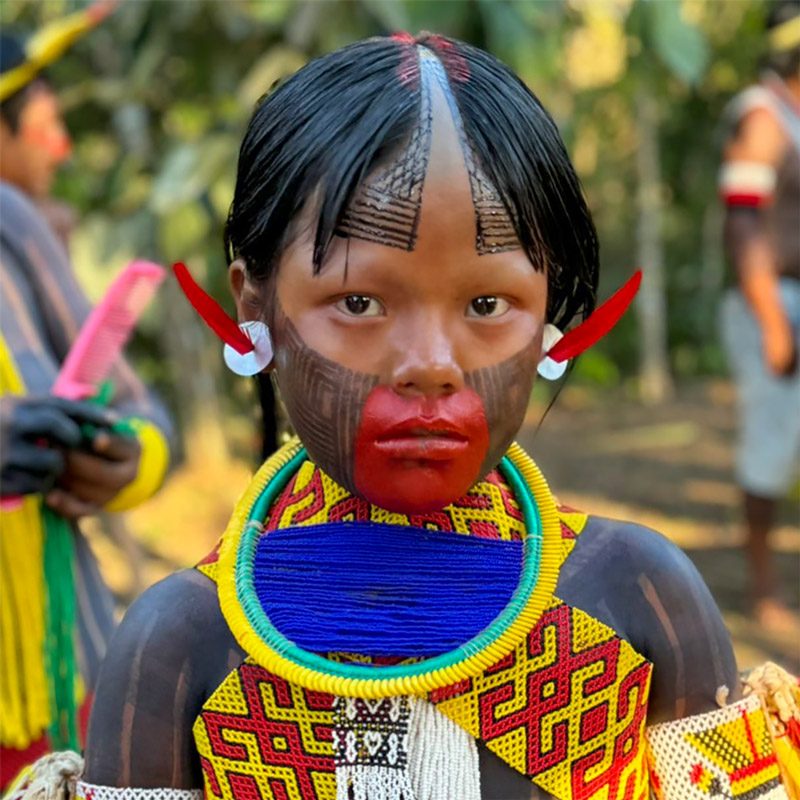
Karajá indigenous territory on Bananal Island: the people of the water
The culture of the Iny people
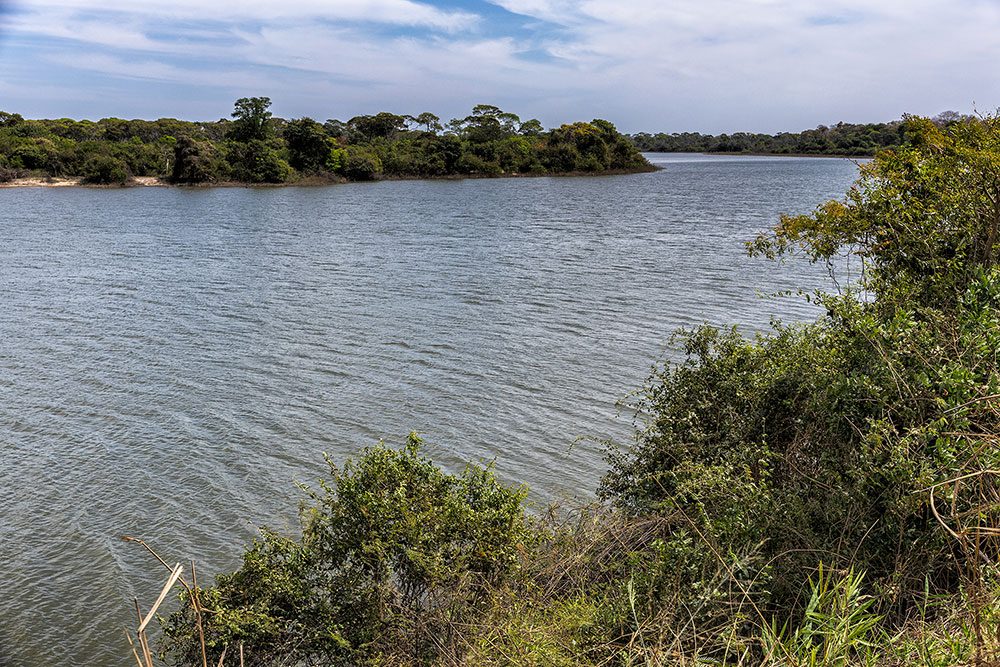
This ethnographic trip to Brazil will continue into the territory of the Karajá people on Bananal Island, reached by crossing the Araguaia River by motorboat. The Karajá call themselves the Iny, meaning People of the Water, a name that perfectly reflects their deep connection with the Araguaia River and the surrounding wetlands that form their ancestral homeland. Our first encounter will take place in the Sacred Meeting House, where we will be welcomed by the village chief and the community elders. There, we will learn about Karajá social organisation and spend time with those who continue to preserve many of the traditions inherited from their ancestors.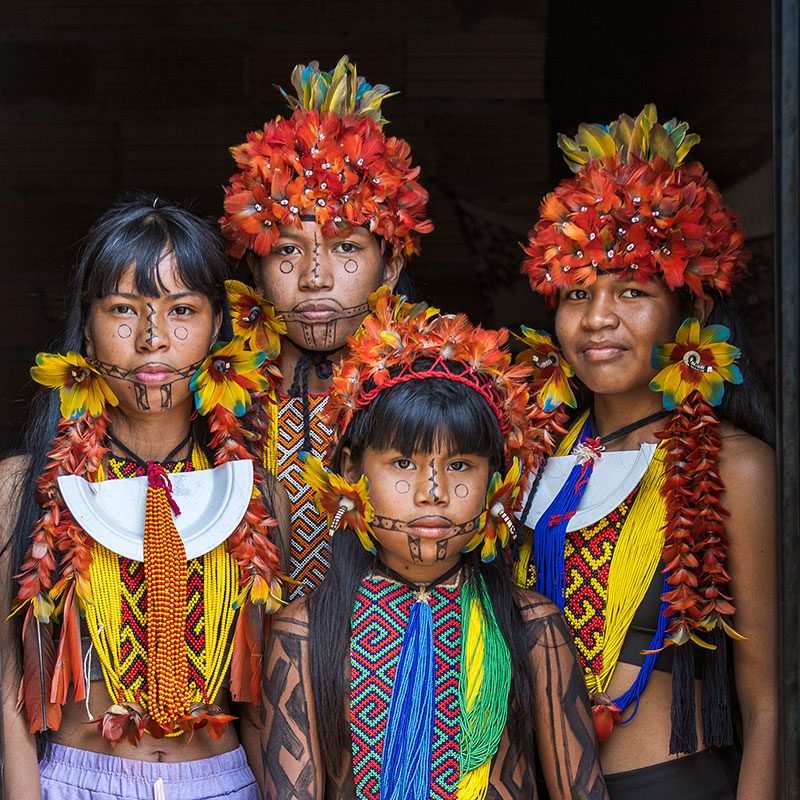

Cosmology, art and living traditions
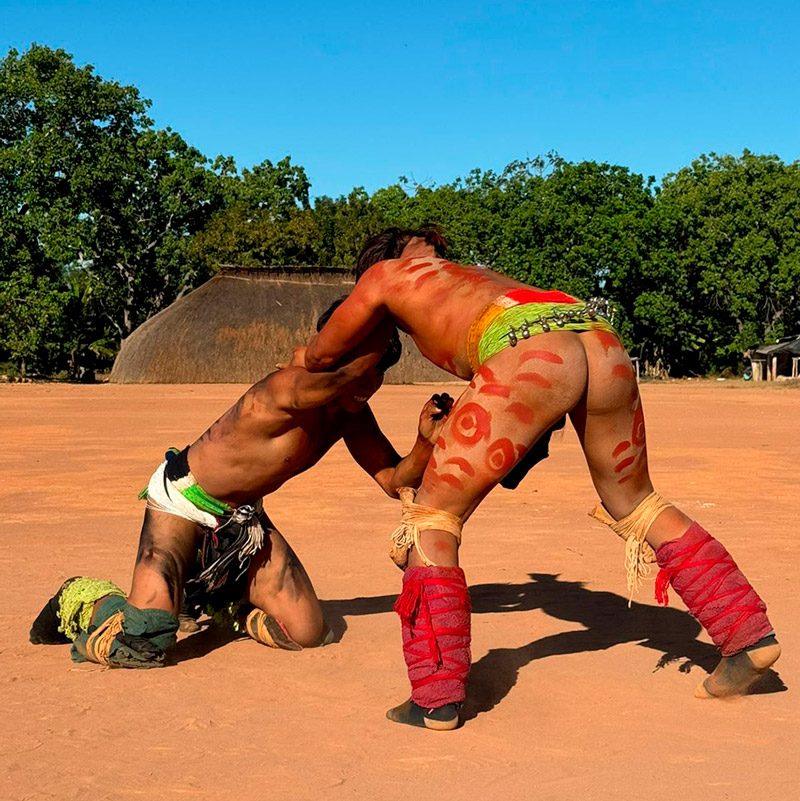
During our stay, we will explore Karajá cosmology alongside the shaman and local leaders. We will discover their understanding of the world, the importance of natural elements within their belief system and the central role that rituals continue to play in everyday life. Also, we will learn about their remarkable ceramic tradition, regarded as one of the finest artistic expressions of this Indigenous people. In addition, we will observe their distinctive body-painting techniques, which differ significantly from those of the Kayapó, and discover the symbolism behind their decorative designs. In addition, we will meet men and women who still practise the traditional facial tattooing of the chin and cheeks using locally produced black ink applied with handmade needles. These markings remain an important symbol of cultural identity.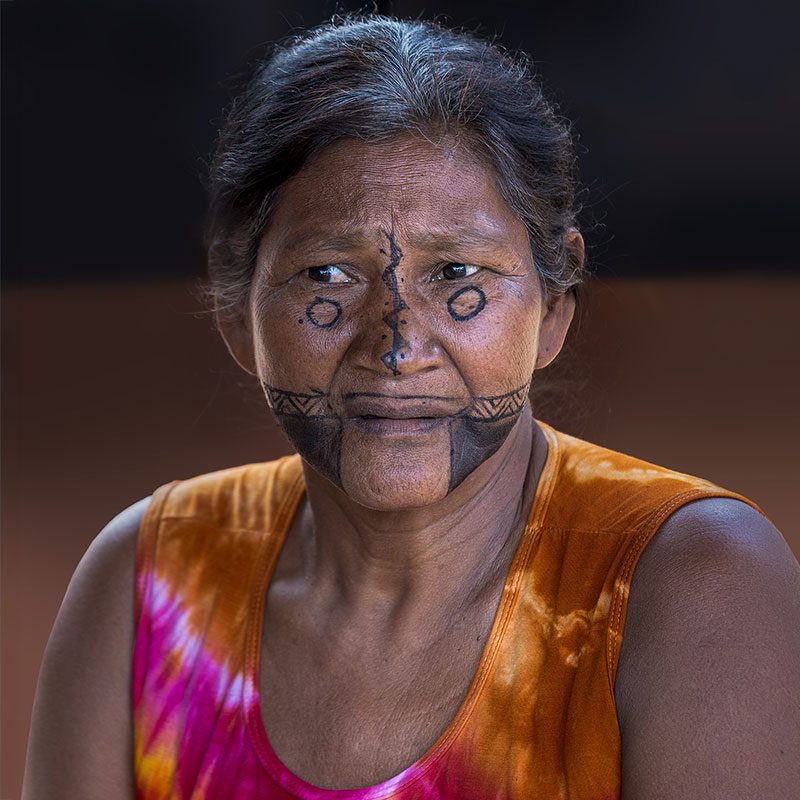

Mask ceremonies and traditional celebrations
The day will conclude with a spectacular ceremonial masquerade performed by the younger members of the community. During this celebration they will wear impressive feather headdresses reserved exclusively for special ceremonial occasions. Consequently, this stage of the ethnographic trip to Brazil will provide a fascinating insight into the profound relationship between spirituality, artistic expression and nature within Karajá culture.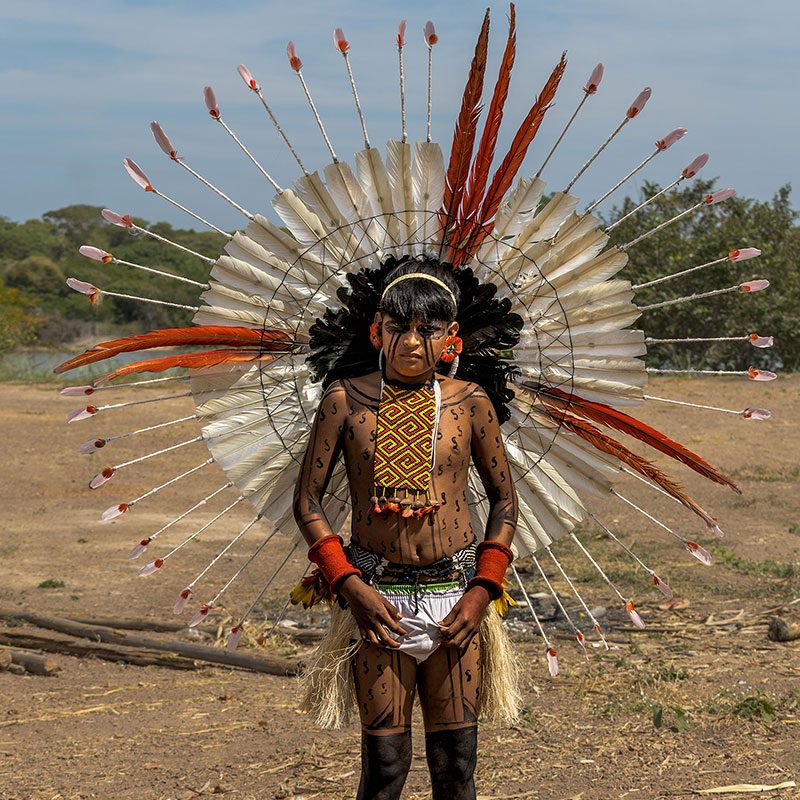
Redenção and Palmas: two cities that help explain contemporary Brazil
The ethnographic trip to Brazil will also include visits to two cities that help place the Indigenous experience within the wider context of modern Brazil. We will visit Redenção, a town founded during the agricultural expansion of the late 1970s into the southern Amazon. Walking through its streets, we will experience its distinctive atmosphere, closely associated with cattle ranching and the cowboy culture that characterises much of southern Pará. Later, we will arrive in Palmas, the modern capital of the state of Tocantins. There we will explore some of its principal urban landmarks before bringing the expedition to a close. This final stage of the ethnographic trip to Brazil highlights the striking contrast between contemporary Brazilian society and the traditional ways of life preserved by the Indigenous communities encountered throughout the journey.
An ethnographic trip to Brazil among indigenous cultures and living traditions
Overall, the ethnographic trip to Brazil offers an exceptional immersion into some of the country's most representative Indigenous cultures. We will not only spend time with communities that continue to preserve many of their ancestral traditions, but also gain a deeper understanding of their ceremonies, social organisation and the close relationship they maintain with both the Amazon rainforest and the Araguaia River. For this reason, this expedition has been designed for travellers with a genuine interest in anthropology, Indigenous peoples, traditional cultures and expeditions that venture far beyond conventional tourist routes.
© Photos by Ana Robles, Pongtharin Tanthasindhu and Joan Riera taken during an ethnographic trip to Brazil.
► Download the detailed itinerary for this ethnographic trip to Brazil
Click on the button below to easily access the download form for the itinerary of this ethnographic trip to Brazil.

 ES
ES

