
Papua New Guinea
Ethnographic trip to Papua New Guinea:
Tribal Cultures and Traditions
12 Sep – 3 Oct 2027 · 22 days · From 7,290€
This Papua New Guinea tour crosses one of the most culturally diverse countries on the planet, from the coast of Port Moresby to the Highlands and the Bismarck Sea. Last Places has been operating in Papua New Guinea since 2022 and, having explored many of its regions, we have set out to showcase areas rarely visited by tour groups. We will begin in the capital, coinciding with Independence Day, and the Goroka Festival, one of the great cultural gatherings of Melanesia, will open the doors to the Highlands.
After the festival, we will head into the villages to discover the daily life of their communities and spend time with them. We will attend the Sili-Muli ritual of the Enga, meet the Melpa in Mount Hagen and fly to the remote Simbai Valley to stay with the Kalam. We will then discover the animist heart of the Chimbu and the rite of passage of young Bundi men, before ending in Madang, on the coast, with people from the Sepik and the potters of Bil Bil.
We will travel in a group of 4 to 12 travellers, accompanied by an expert Spanish guide from Last Places and by local guides. Over 22 days we will stay in three- and four-star hotels, in lodges and in a local guesthouse with basic facilities, and we will travel by air-conditioned minibus and 4x4, with two domestic flights and a private flight. The only trek, to the lodge in the Simbai Valley, will take an hour and a half to two hours, at a comfortable pace and with porters. The detailed itinerary includes the day-by-day programme, the planned hotels, the flights, the meals included and the length of each transfer. Download the trip itinerary and we will send it to your email address.



Our trip to Papua New Guinea: what we will discover
Port Moresby: the Motu village of Hanuabada and the National Parliament
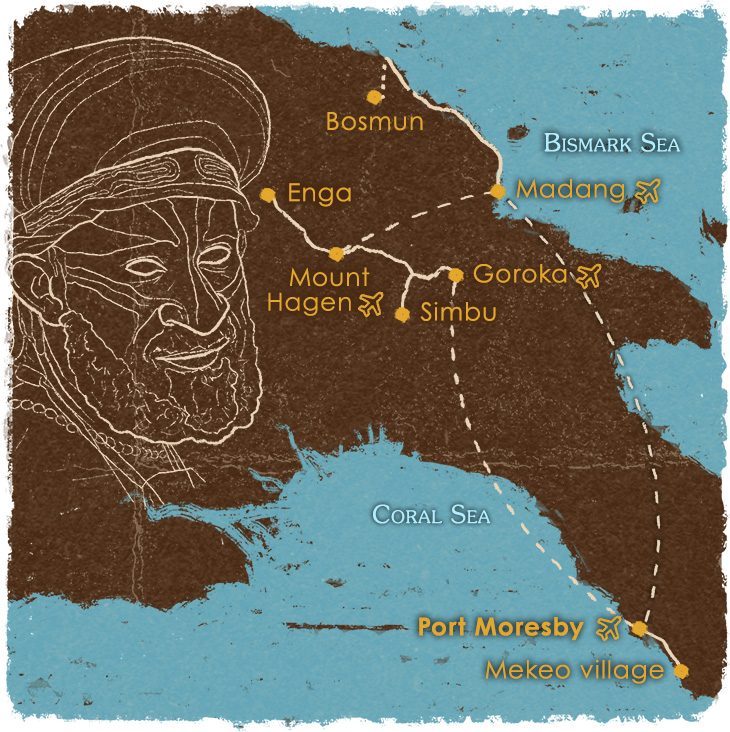
We will begin in Port Moresby, the country’s capital and its main political and administrative centre, where Melanesian heritage sits alongside contemporary development. Our first visit will be to Hanuabada, the historic village of the Motu people, with its houses raised on stilts along the bay. We will meet its residents, learn about their maritime heritage and discover traditional tattooing, a practice that declined over recent generations but is now enjoying renewed interest among young people.
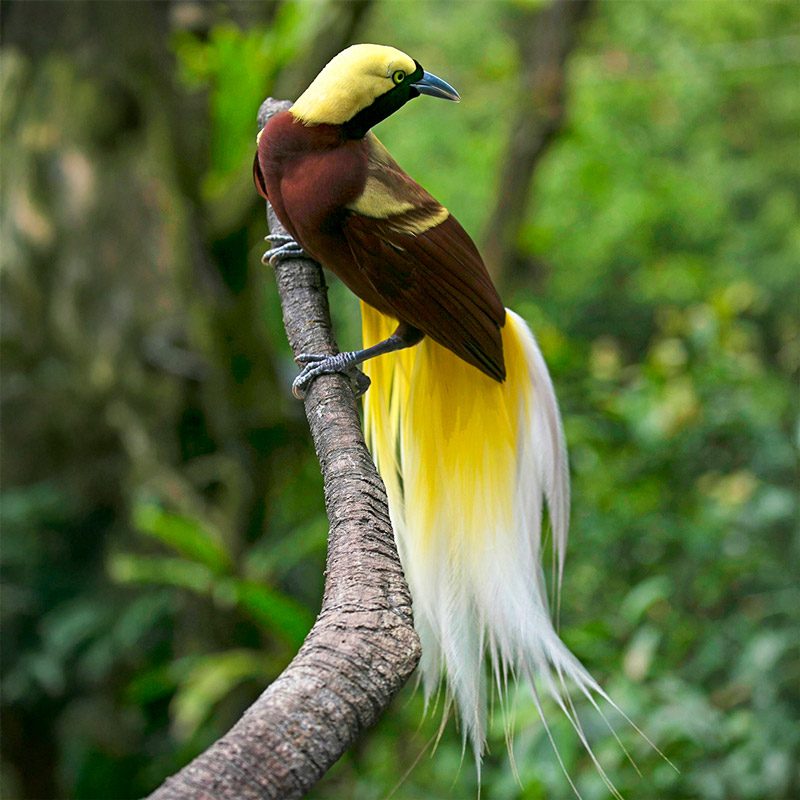
We will then visit the National Museum and Art Gallery, with ethnographic collections from hundreds of the country’s peoples, and the National Parliament, whose architecture is inspired by the haus tambaran, the men’s ceremonial houses of many Melanesian communities. The following day, in the Port Moresby Nature Park, we will get a close look at Papua New Guinea’s endemic wildlife: birds of paradise, Victoria crowned pigeons, cassowaries, tree kangaroos and numerous reptiles.
The Huli of Port Moresby: ceremonial wigs far from Tari
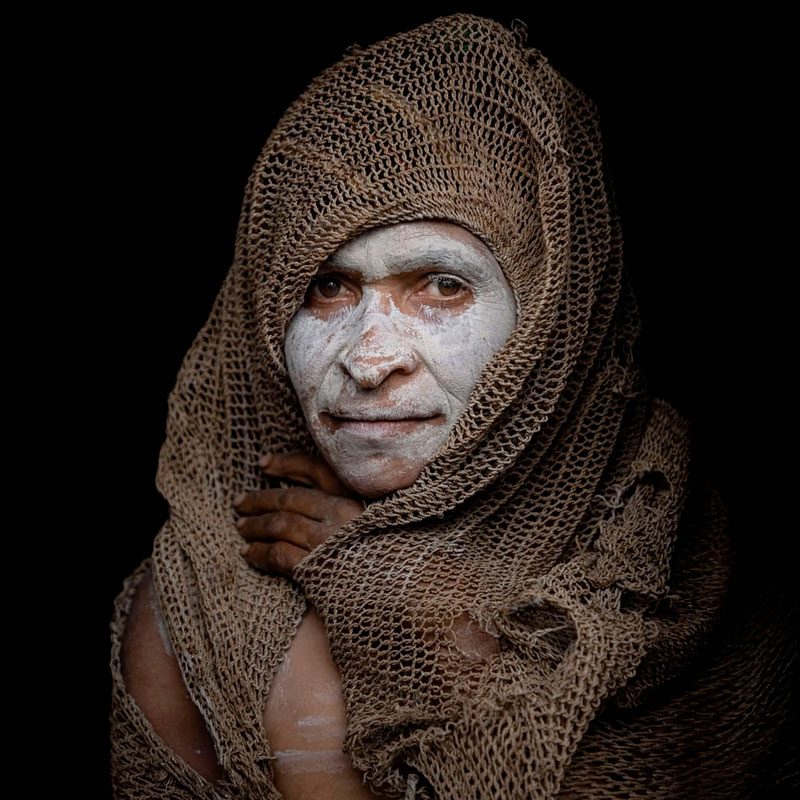
An hour from the capital, a Huli community living far from its traditional homeland awaits us. Originally from the Tari region, in the Highlands, some Huli families moved to the outskirts of Port Moresby decades ago in search of new opportunities, while keeping much of their cultural identity. We will be welcomed by the village chief, the elders and other members of the community, including the widows.
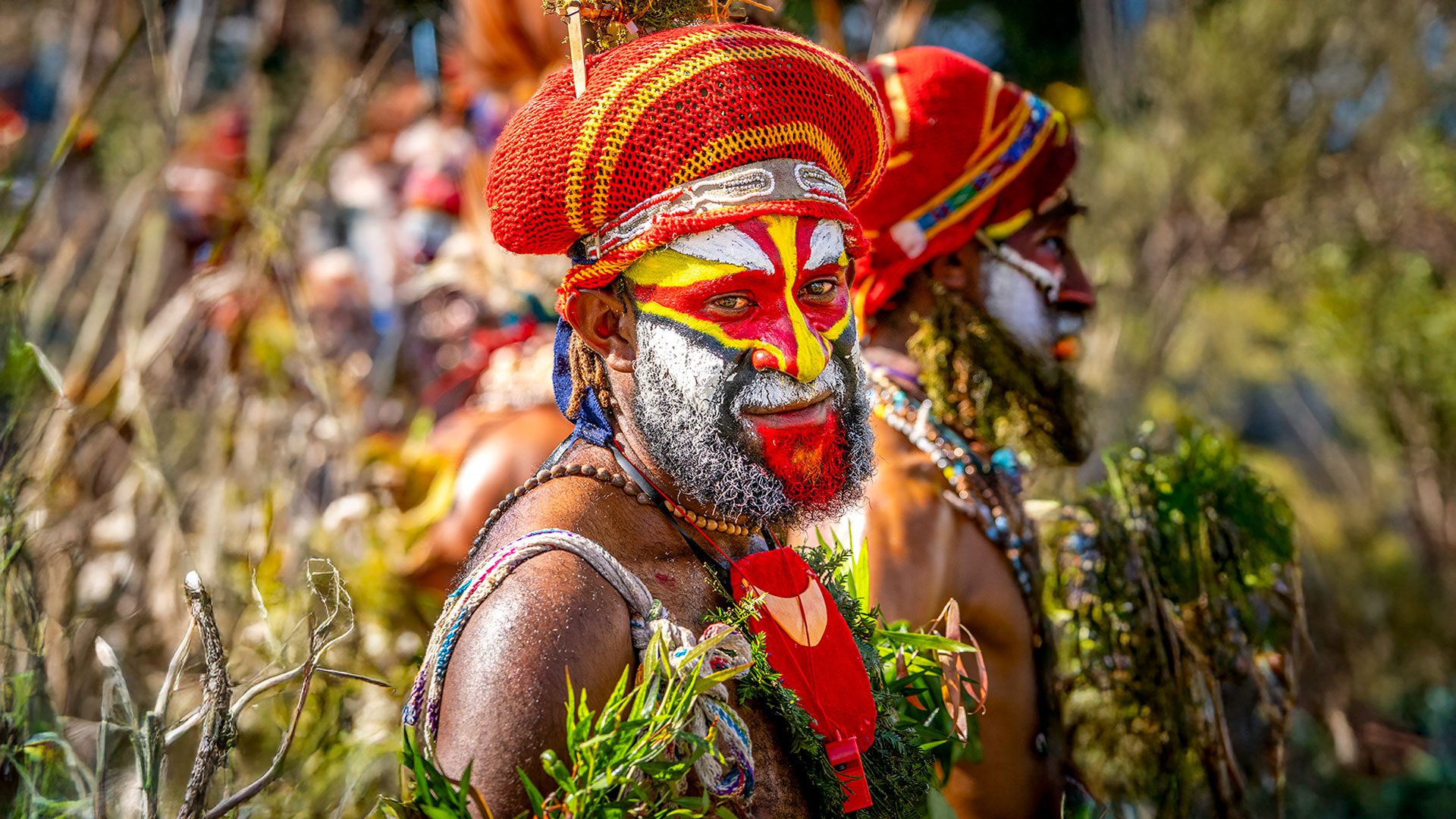
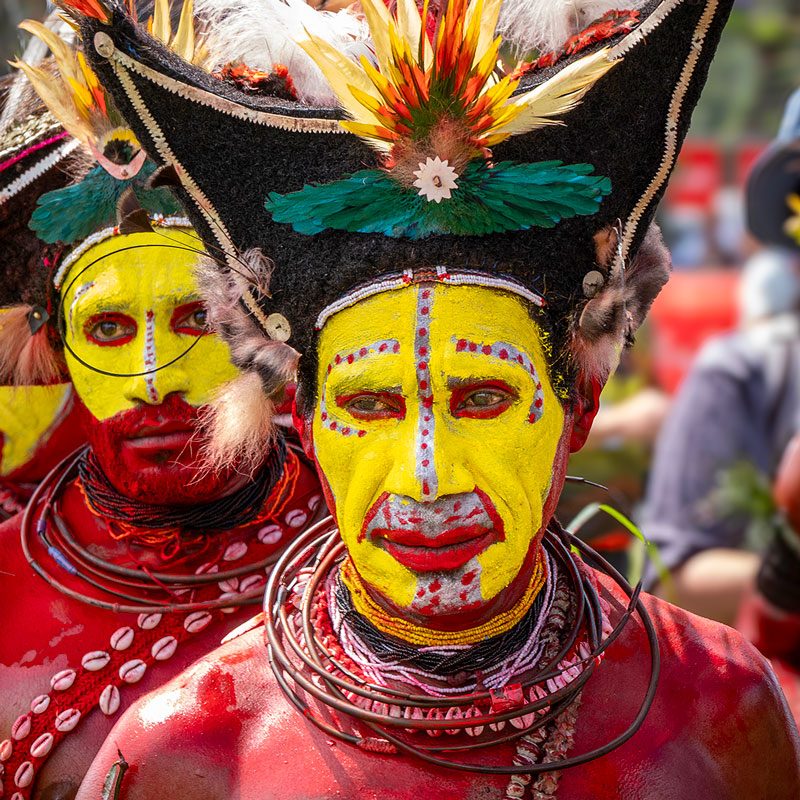
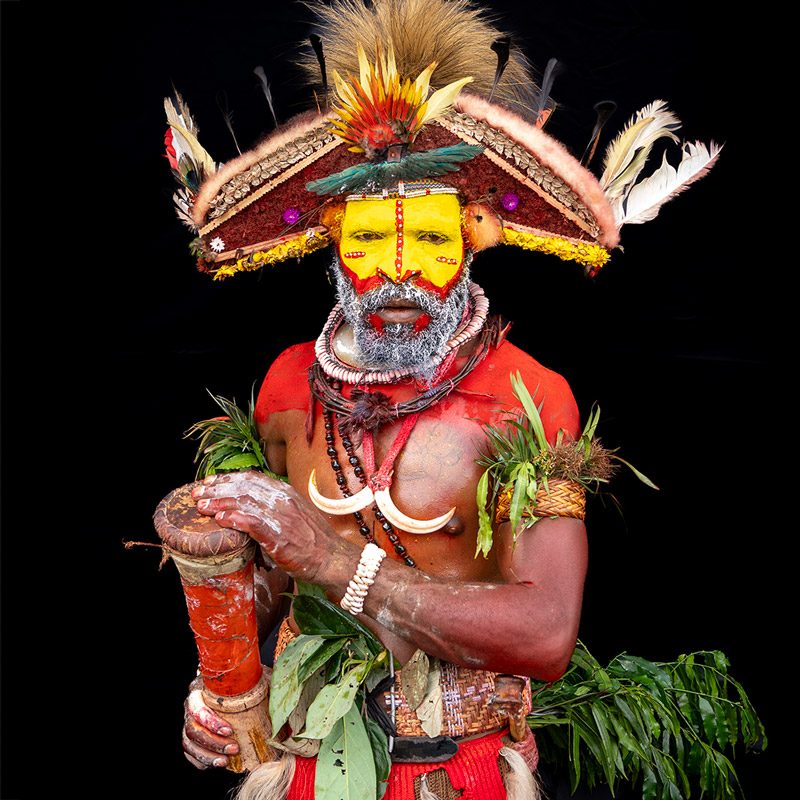
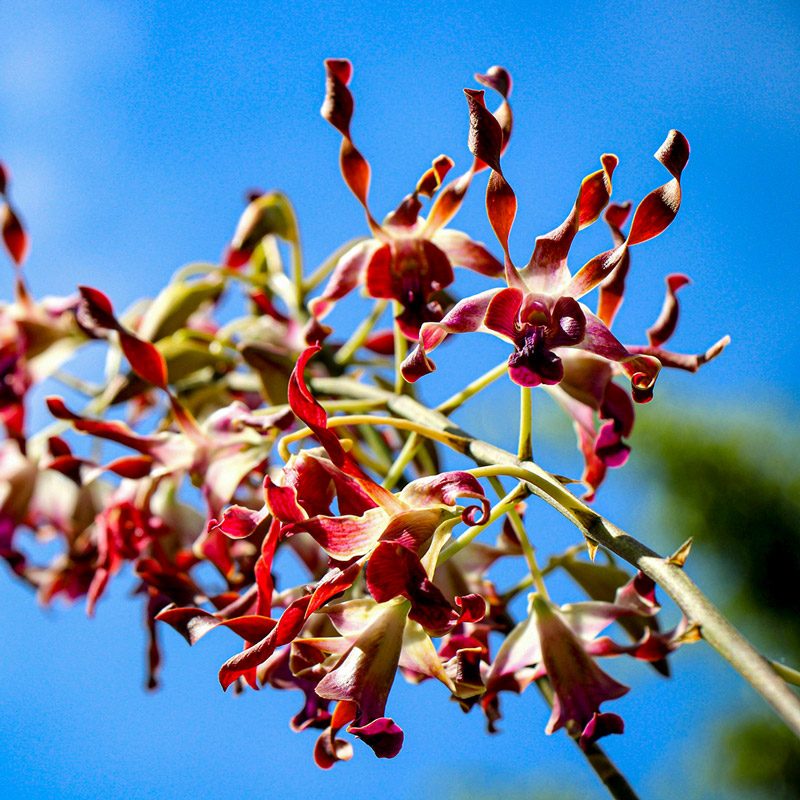
The Huli are famous for their ceremonial wigs, decorated with bird-of-paradise feathers and other natural materials that symbolise prestige, identity and belonging to the clan. In their homeland, young men let their hair grow for long periods to make them. With our hosts we will learn about the meaning of these wigs, their body decoration and their ancestral beliefs, and we will watch a dance that will introduce us to their music and ceremonial expressions.
Independence Day in Port Moresby
On 16 September, Papua New Guinea celebrates Independence Day, which marks its independence from Australia in 1975. The date brings together people from the country’s many language and cultural groups, and it is an exceptional opportunity to see how communities express pride in their heritage and their national identity.
Depending on that year’s official programme and access to each event, we will explore the celebrations around Port Moresby: markets, public festivities, cultural performances and community gatherings.
Goroka and the Asaro Mudmen
From the coast we will travel up to Goroka, in the Eastern Highlands, one of the most densely populated regions of the country. Although some areas have become more accessible over time, many of its communities keep a strong sense of identity and customs of their own. Close to the town we will visit an Asaro village, famous for its mud-covered dancers, the celebrated Mudmen, and learn about the community’s history, cultural practices and artistic expressions.
The Goroka Festival: two days of dances, songs and headdresses
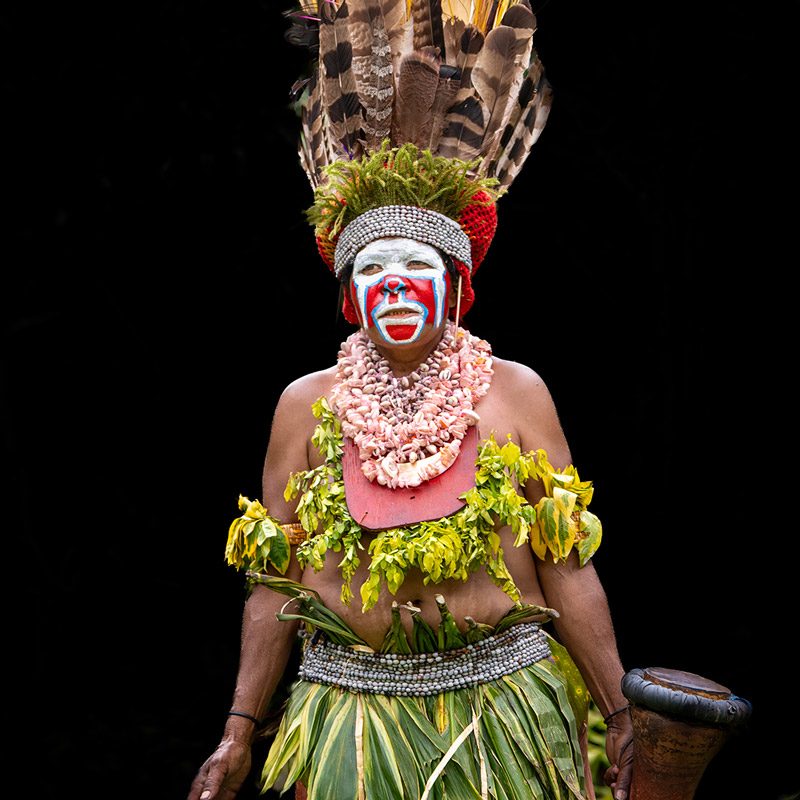
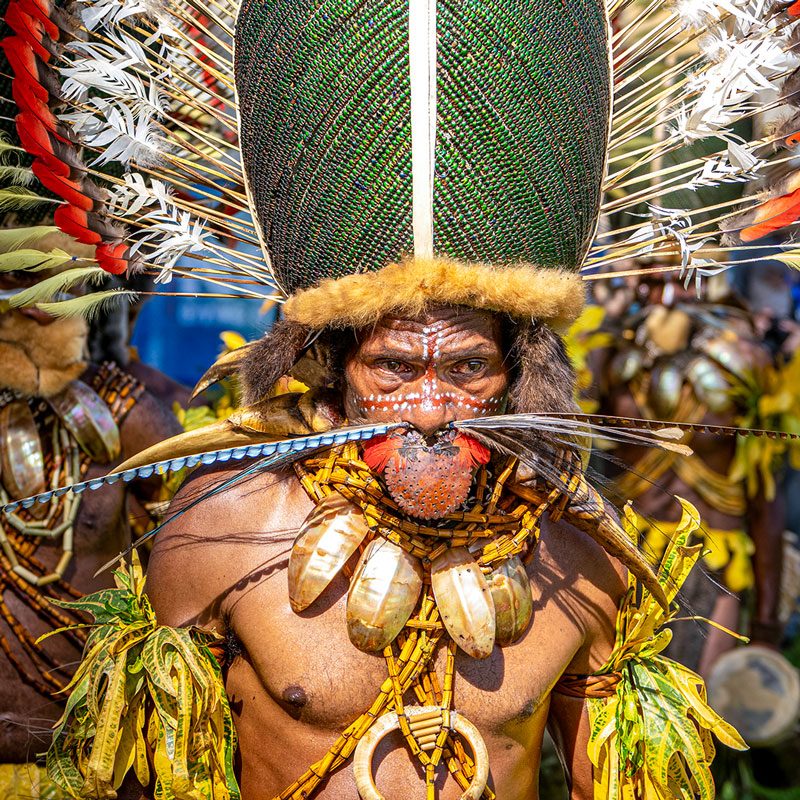
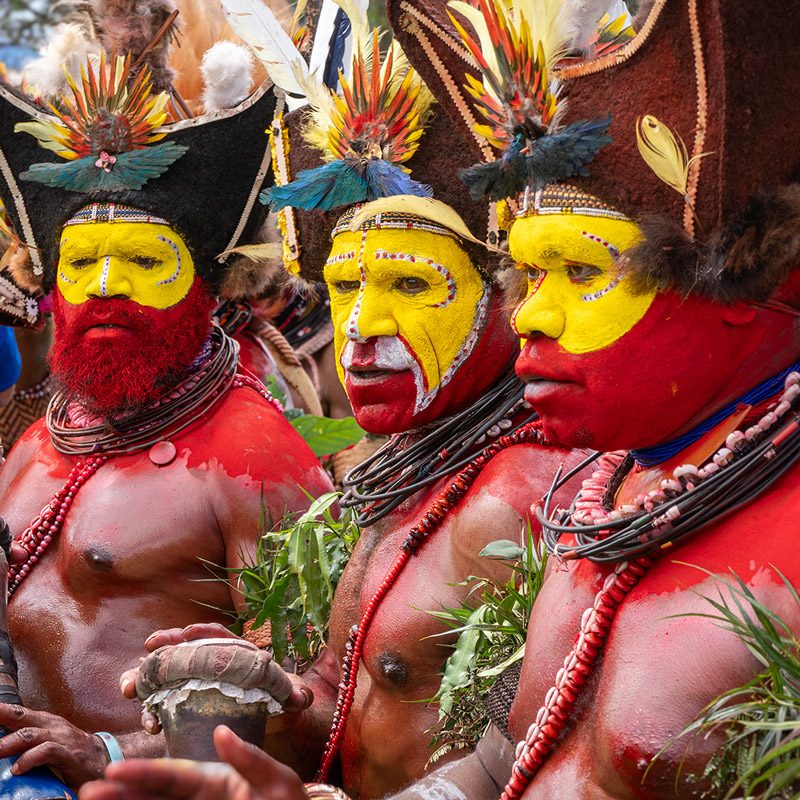
One of the most eagerly awaited moments will be the Goroka cultural festival, the great gathering of the Highlands. The day before, we will start watching the participants prepare their costumes, decorations and ceremonial dress. Over two days, groups from different regions of the country will come together with their feather headdresses, body paint and ornaments to perform dances, songs and ceremonial displays.
The festival is often known as a sing-sing, the name given to the traditional gatherings at which groups meet to dance and sing. Through music, dance and visual expression, each community displays its identity, its history and its social traditions. Historically, these gatherings have helped to build relationships between groups and even to restore peace after periods of conflict.
On the second day we will rise early to watch the preparations: the application of body paint, the fitting of headdresses and the finishing touches to the costumes. It will be a superb opportunity for documentary and portrait photography – always where permitted – and to talk with the participants about the traditions they represent.


Wabag: the Enga and the Sili-Muli ritual
From Goroka we will cross the landscapes of the Highlands to Mount Hagen, stopping at some villages to learn about rural life and the traditions of the region. Further west, in Enga Province, we will reach the village of Waril, near Wabag, to meet the Enga community, which maintains its own social structures, ceremonial practices and artistic expressions.
There, members of the community will present the Sili-Muli to us, an important ritual practice of the Enga. We will talk with them about the meaning of the ceremony and its place in community life. We will spend the night in Wabag, close to the community, to extend the encounter.
Mount Hagen: a Melpa ceremony in the Western Highlands
On the way back to Mount Hagen we will see how neighbouring communities in the Highlands often keep distinct languages, ceremonies and forms of artistic expression. Near the town we will experience a traditional ceremony of the Melpa, one of the main peoples of the Western Highlands, known for their elaborate ceremonial displays, their dances and their strong community ties.
The Simbai Valley: staying with the Kalam
A light aircraft will take us from Mount Hagen to the Simbai Valley, a remote, mountainous region and the homeland of the Kalam people. From the airstrip we will walk to Bayan Lodge, an eco-lodge run by the community itself, where the chief and the elders will welcome us. This first encounter will prepare us for the following day.
Accompanied by members of the community, we will learn about the daily life of the Kalam, their ancestral beliefs, the way they prepare food and their ceremonial customs. We will discover the meaning of traditional offerings and, if the community holds one during our visit, we will witness a pig sacrifice, a practice linked to the ancestors and to the relationships between families, communities and the spirit world.
We will also take part in preparing a mumu, an earth oven in which food is cooked with hot stones and layers of natural materials. Another highlight will be learning about their ceremonial hairstyles and headdresses, with the adornments worn during their rituals, and talking with our hosts about their knowledge of the environment.
Chimbu: a traditional wedding and the Gena caves
Back in Mount Hagen, we will continue by road to the mountains of Chimbu, also known as Simbu, whose people are famous for their ceremonial traditions and elaborate body decoration. If the community allows it, we will witness a traditional Chimbu wedding, a window onto marriage customs, family relationships and the traditions that bind generations together. We will also learn about their tattooing practices and their meaning.
The following day we will reach the area of the Gena caves to meet the local community. Our hosts will show us some of their morning rituals and explain their meaning, always respecting their privacy and the protocols of their ceremonies. We will share a meal with them and learn about their spiritual beliefs, their oral traditions and their relationship with the natural environment.
Once in Goroka, the local museum will give us a deeper insight into the history and heritage of the Highlands, including the country’s role in the Pacific campaign during the Second World War.
Walium: the rite of passage of young Bundi men
From Goroka we will descend towards the coast, in a transition from the mountains of the Highlands to the warmer climate of Madang Province. In Walium the Bundi await us, and we will meet their chiefs to learn about their traditions and way of life. There we will witness a rare ceremony linked to the rite of passage of young men. Before continuing, we will explore the surroundings of the forested Bismarck Range.
Madang: people of the Sepik and the potters of Bil Bil
We will then reach Madang, a former German colonial port on the shores of the Bismarck Sea. In the neighbourhood of Wagol we will meet people from the Sepik River region, who will show us their distinctive masquerades and body art.
The next day we will visit Bil Bil, a fishing village famous for its pottery, where the chief and the elders will welcome us. Back in Madang, the ethnographic museum and the local market will introduce us to the region’s artistic traditions. In Port Moresby, Boroko Market, with its crafts and traditional art, will bring the journey to a close.
© Photos by Fernando Rosselot, Aníbal Bueno and Xavi de las Heras taken during a tribal trip to Papua New Guinea.
Scheduled departures
More trips to Papua New Guinea
We can also organize your tailor-made trip to . En este caso, indícanos tus intereses mediante el formulario de contacto que encontrarás más abajo.
Get in touch with our experts.

 ES


