
 Trip to Pamir from 15 to 25 July 2027 / From 2,790€
 Discover the highlights of this trip to Pamir:
Dushanbe and the gateway to the Pamir
From the capital to the mountains
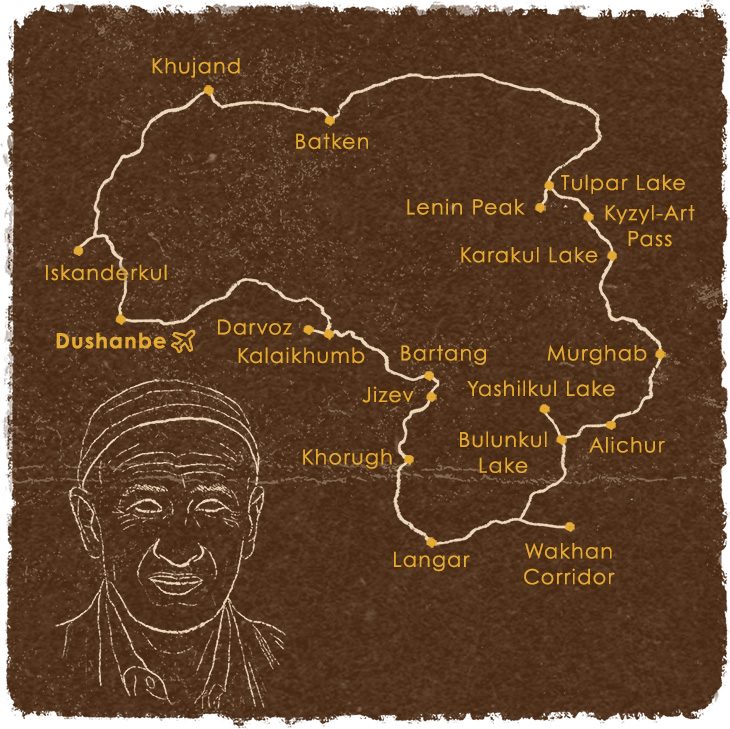
We will begin our trip to Tajikistan in Dushanbe, the country’s capital. From there, we will head east, leaving its fertile valleys behind as we gradually enter the Pamir mountains.
The landscape will change as we advance. Mountain roads will lead us towards increasingly rugged territories until we reach the Panj River Valley.
The medieval legacy of Hulbuk
On the way, we will visit the Palace of Hulbuk, an 11th-century archaeological complex. It was an important centre of medieval Central Asian civilisation. Its remains will allow us to explore the history of a region connected for centuries by major trade and cultural routes.
Shurobod Pass and the Panj River
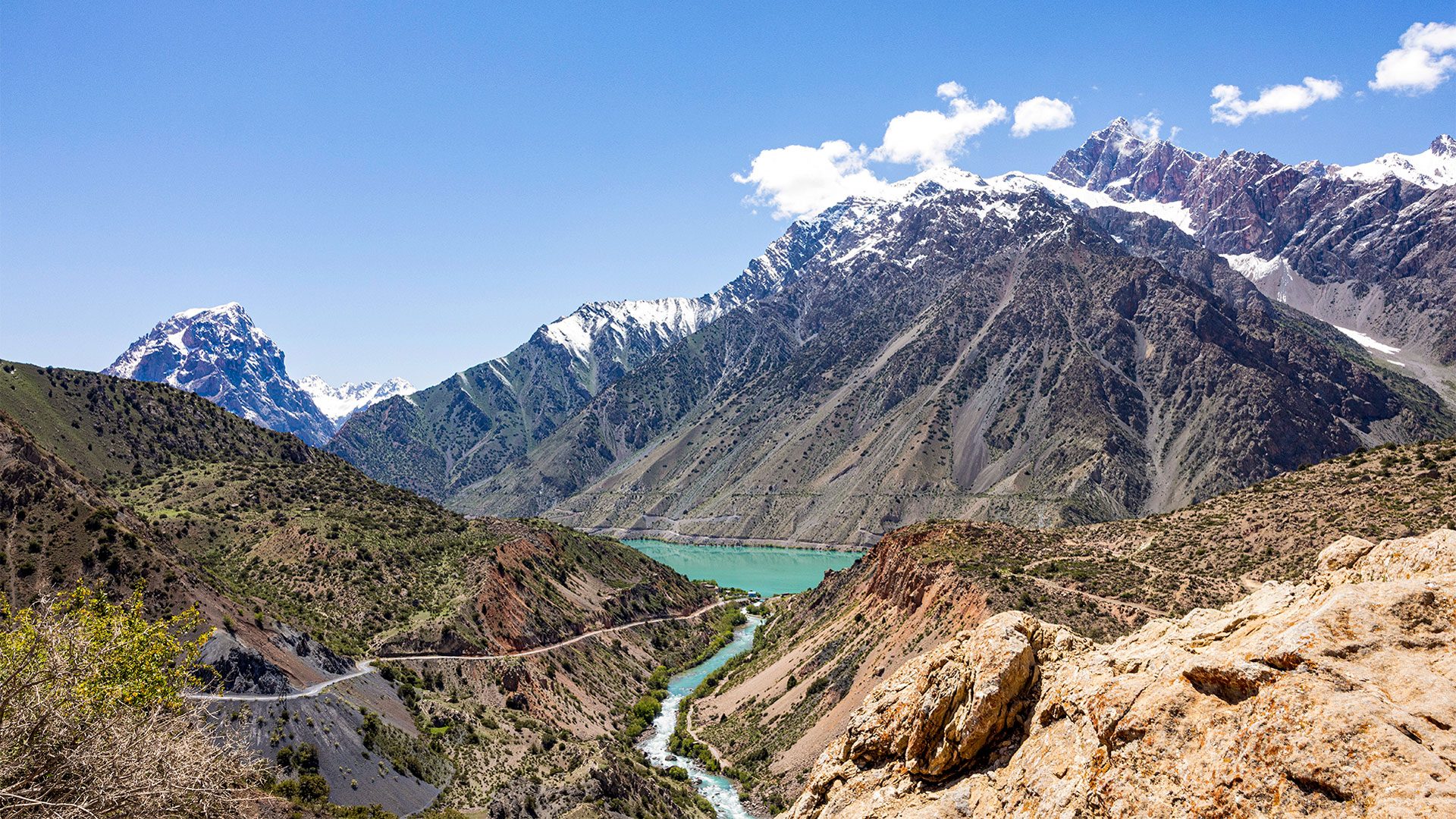
We will cross Shurobod Pass, from where we will begin to see the first great panoramas of the Pamir. We will then descend towards the Panj River Valley. Here, the river forms the natural border between Tajikistan and Afghanistan. We will follow its course through deep canyons, traditional villages and distant snow-capped peaks. Finally, we will reach Kalaikhumb, in the Darvoz region. Here, we will have our first encounter with traditional Pamiri hospitality. We will stay in a local family home and share their surroundings and way of life.
Bartang and Jizev: towards the most isolated Pamir
The Bartang Valley
We will leave the main Pamir road behind to venture into the Bartang Valley. It is one of the most isolated and least visited regions of this mountain range. We will follow the turbulent Bartang River through a landscape shaped by immense geological forces. Narrow mountain roads and river crossings will make the journey itself part of the adventure.
Jizev, a community suspended in the mountains
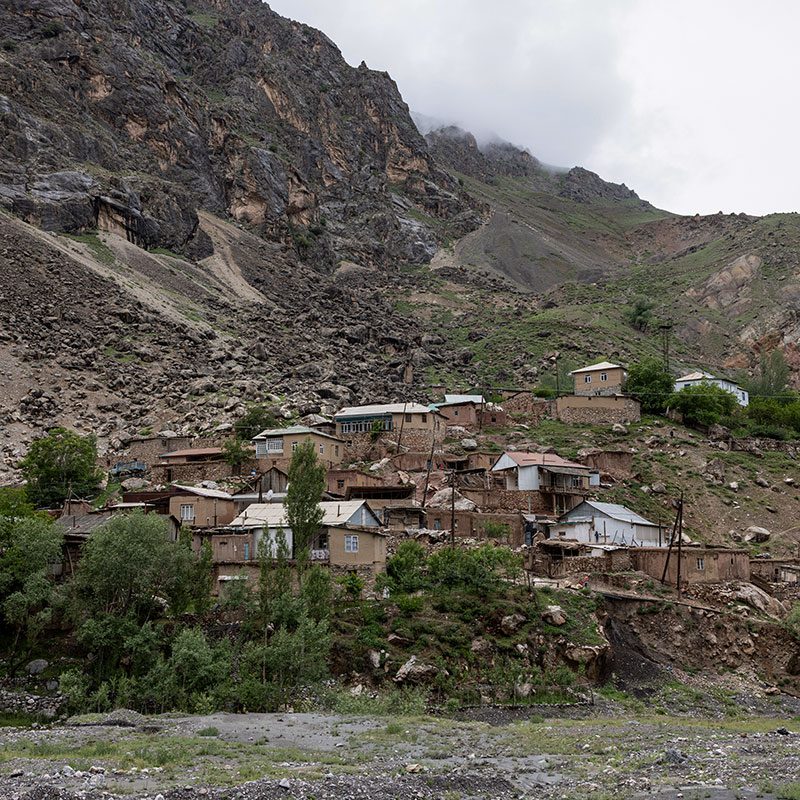
From the valley, we will begin a hike towards Jizev. The village lies hidden among crystal-clear lakes, green meadows and imposing cliffs. Its isolation has allowed centuries-old traditions and a distinctive mountain culture to survive. To a great extent, it remains disconnected from the outside world, while the community maintains a close relationship with its surroundings. We will walk through the valley among untouched nature and peaceful lakes. In addition, we will find excellent opportunities for photography.
Experiencing Pamiri isolation
In Jizev, we will experience Pamiri hospitality first-hand. We will stay in a traditional home and immerse ourselves in the slow pace of this remote community. The absence of internet and minimal modern infrastructure will make its isolation even more evident. It will be an unusual opportunity to disconnect from the outside world and approach a way of life that has preserved many of its traditions.
Khorog and the Western Pamir
The Panj, a border between two worlds
We will return to the Panj Valley to continue our trip to Pamir eastwards. For much of the journey, we will have Afghanistan on the other side of the river. From the road, we will be able to observe traditional villages, terraced fields and ancient watchtowers. The landscape will also take centre stage. We will advance between enormous cliffs, fast-flowing rivers and small mountain settlements.
Khorog, the heart of the Tajik Pamir
We will reach Khorog, the cultural and administrative heart of the Tajik Pamir. Located at the confluence of several valleys, the city is a meeting point for travellers, traders and local communities. We will visit its bazaar, where inhabitants from nearby valleys come to sell fresh produce, handicrafts and traditional goods. It will be a good opportunity to observe everyday life in the Pamir and discover its local diversity.
The Khorog Botanical Garden
Also, we will visit the Khorog Botanical Garden, located in the mountains above the city. Considered one of the highest botanical gardens in the world, it offers magnificent views over Khorog, the mountains and the river valleys.
Wakhan Corridor: facing Afghanistan
One of the most remote borders in Central Asia
The Wakhan Corridor will be one of the great settings of our trip. We will once again follow the Panj River, which here marks the border between Tajikistan and Afghanistan. From the opposite bank, we will be able to see traditional Afghan villages, cultivated terraces and ancient watchtowers. Landscape and human life will remain closely connected throughout. Small settlements appear nestled between the river and the great mountains of the Pamir.
Yamchun Fortress
We will visit Yamchun Fortress, an ancient stronghold built high above the Wakhan Valley. From its walls, we will contemplate an extraordinary panorama of the mountains and Afghan territory. Its position also helps us understand the strategic importance this corridor held historically.
Bibi Fatima and the Wakhi communities
We will continue to the Bibi Fatima Hot Springs, a place revered by local inhabitants for its healing properties. Afterwards, we will pass through small Wakhi settlements surrounded by mountains and far from major urban centres. This contact with local communities will be one of the distinctive features of our trip to Pamir.
Langar and its petroglyphs
We will reach Langar, one of the villages located at the eastern end of the Wakhan Corridor. Depending on the conditions of the trip, we may explore its petroglyphs and walk through the village. It will be another opportunity to approach the history and everyday life of this remote territory.
The Eastern Pamir: lakes, yaks and great altitudes
Towards the great Pamir steppes
We will leave the Wakhan behind to climb towards the vast high plateau of the Eastern Pamir. The landscape will change radically. Green valleys will give way to wide-open plains, gentle hills and barren mountains. We will enter one of the most extreme territories of our trip to Pamir.
Bulunkul and Yashilkul
First, we will reach Lake Bulunkul, located next to one of the coldest inhabited areas in Central Asia. We will then continue to Lake Yashilkul, known for its turquoise waters and spectacular mountain surroundings. Between the two lakes, we will cross extensive grasslands. Here, herds of yaks and nomadic herders are commonly found.
Alichur and life at high altitude
We will reach Alichur, a small Pamiri settlement surrounded by open steppe and mountains. Here, we will be able to gain an insight into the everyday life of communities living in this high-altitude territory. Its surroundings will help us understand the extent to which the peoples of the Pamir have adapted their way of life to extreme conditions.
Ak-Baital and Murghab
We will cross Ak-Baital Pass, located at an altitude of 4,655 metres. It will be the highest point of the entire route. We will then reach Murghab, the highest town in Tajikistan and the administrative centre of the Eastern Pamir. The town offers a unique perspective on life in this harsh high-mountain environment.
Lake Karakul
Finally, we will reach Lake Karakul, located at almost 3,900 metres above sea level. Its waters stretch between arid mountains and often reflect the snow-capped peaks. The landscape encapsulates much of the essence of the Tajik Pamir: vastness, isolation and awe-inspiring natural dimensions.
Kyrgyzstan: the Alay Valley and Lenin Peak
From the Pamir to the mountains of Kyrgyzstan
Our trip to Pamir will continue towards Kyrgyzstan. We will cross the border and descend towards the fertile Alay Valley. The change in landscape will be striking. The arid high-altitude territories will give way to greener mountains and inhabited valleys.
Lake Tulparkol and Lenin Peak
We will reach Lake Tulparkol, located at the foot of Lenin Peak, one of the great mountains of Central Asia. Rising to 7,134 metres, the mountain dominates the landscape. The area serves as a base camp for mountaineers attempting to reach its summit. From here, we will contemplate glaciers and great peaks. In addition, we may take an optional hike to Traveller’s Pass, at 4,130 metres, to enjoy panoramic views of the surrounding mountains.
The Alay Valley and rural life
We will continue across the Alay Valley and cross Taldyk Pass. The route will take us through farming communities, orchards and fertile valleys of the Greater Fergana. We will observe the everyday life of the rural population and the cultural diversity of this region of Central Asia. Finally, we will reach Batken, a little-visited area of Kyrgyzstan. Its traditional villages and position near the borders of Tajikistan and Uzbekistan reflect the diversity of this frontier territory.
Khujand and the Fergana Valley
Khujand, a Silk Road city
We will return to Tajikistan to visit Khujand, one of the oldest continuously inhabited cities in Central Asia. Its location made the city an important Silk Road trading post. Its history will allow us to connect the mountainous territories we have travelled through with the ancient trade routes that crossed the region.
Khujand Fortress
We will visit the historic Khujand Fortress, whose origins date back to the time of Alexander the Great. We will also explore the cultural complex surrounding it to discover the long history of this Central Asian city.
Panjshanbe Bazaar
We will enter Panjshanbe Bazaar, the largest traditional market in northern Tajikistan. We will walk among its colourful stalls, surrounded by fresh produce, spices, dried fruit, textiles and local handicrafts. The market will also be a privileged place to observe everyday life and the commercial character of Khujand.
Fann Mountains: the final landscape of the expedition
The Fann Mountains
Our journey through Tajikistan will finally take us to the Fann Mountains, one of the country’s most spectacular mountain regions. We will cross mountain passes and valleys surrounded by great peaks. The landscape will also offer excellent opportunities for walking and photographing this final stage of the trip.
Lake Iskanderkul
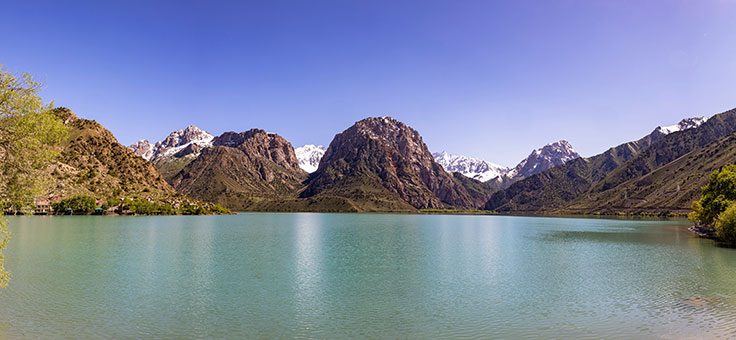
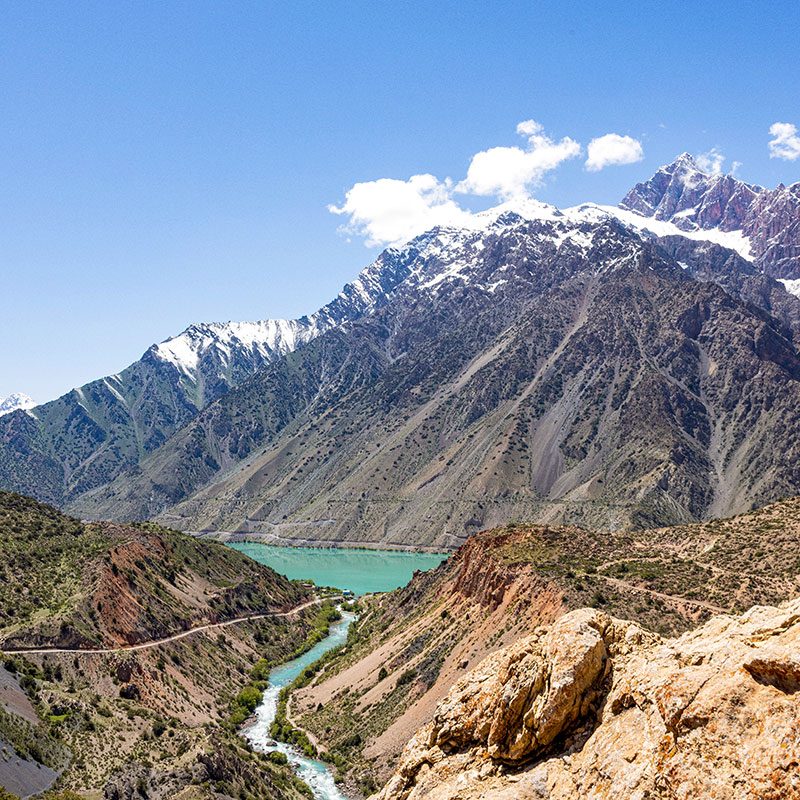
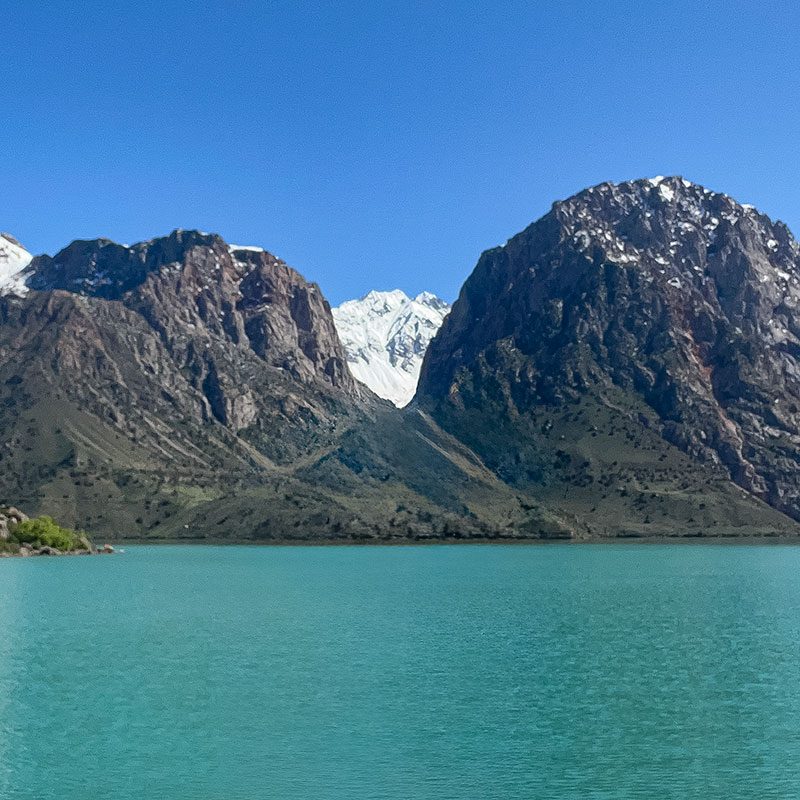
We will reach Lake Iskanderkul, an impressive alpine lake whose name is associated with Alexander the Great, locally known as Iskander. We will explore its shores and enjoy its mountainous surroundings, which remain practically untouched.
The Fann Mountains waterfall
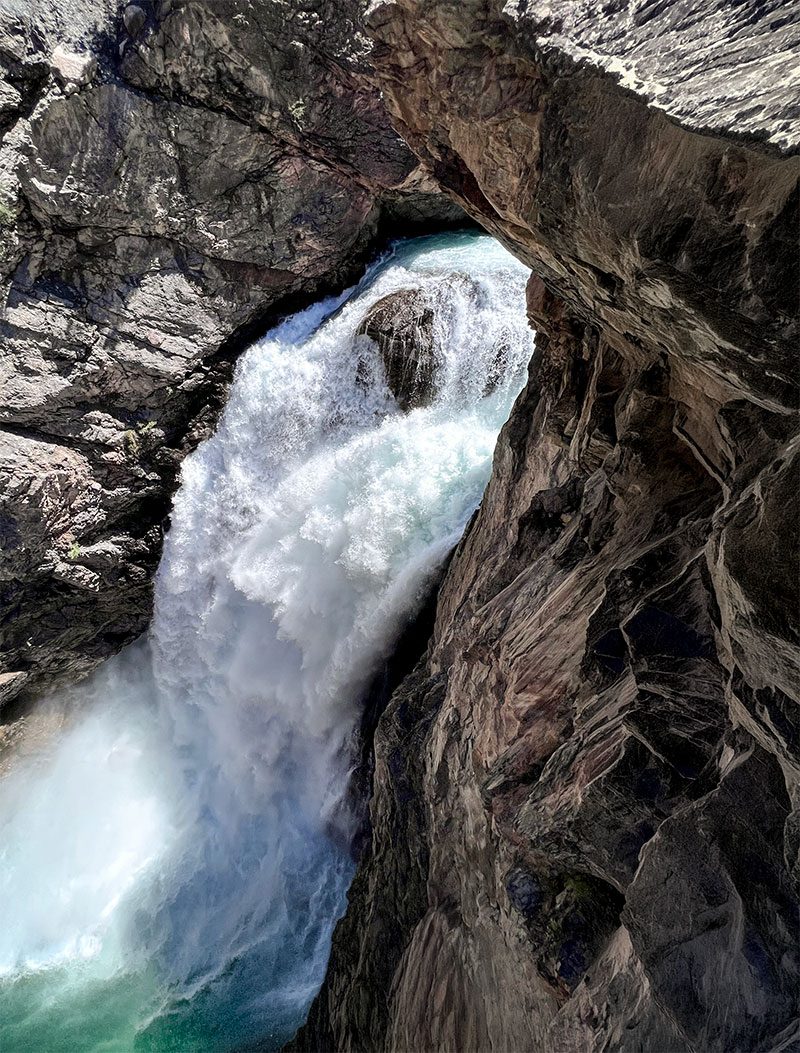
We will take a short hike to the nearby Iskanderkul waterfall, known as the “Niagara of the Fann Mountains”. Surrounded by great peaks and pristine landscapes, it will be the final great setting of our trip to Pamir. After travelling through some of the most remote territories of Tajikistan and Kyrgyzstan, we will return to Dushanbe. We will have travelled through the Pamir, the Wakhan Corridor and the great mountains of Central Asia on an expedition defined by isolation, mountain culture and contact with its communities.
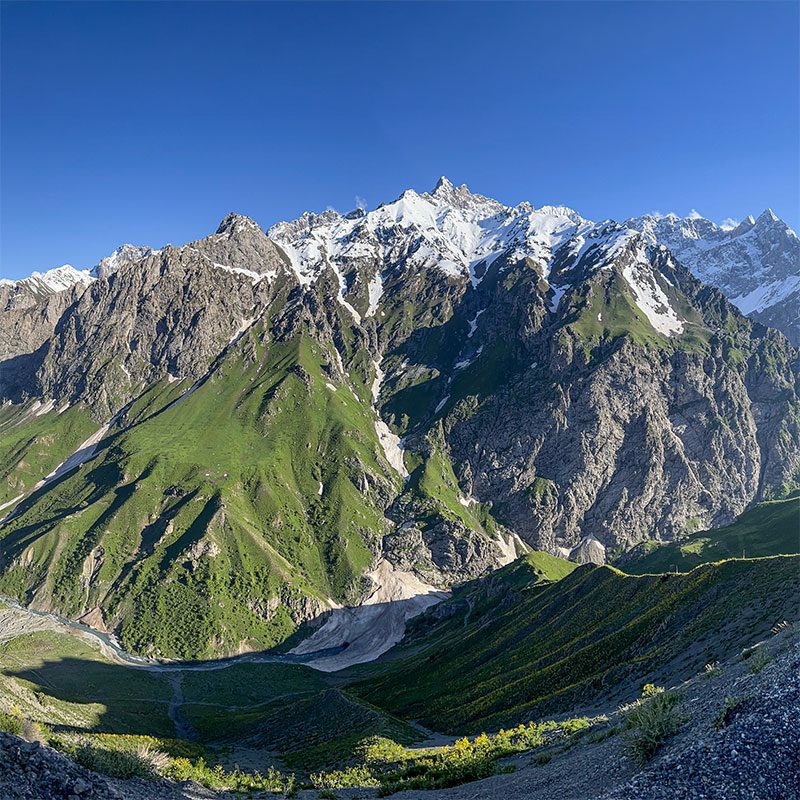
© Photos by Xavi de las Heras taken during a trip to Pamir.
► Download the itinerary for this trip to Pamir
Click the button below to reach the form for downloading the itinerary for this trip to Pamir.

 ES
ES

