
The Gambue tribe of Angola share many traditions with their neighbours, the Muila and the Handa. One of them is the women’s use of bead and clay necklaces, as well as complex hairstyles that indicate the marital status of each Gambue woman.
Nowadays, traditional tribal dress can only be seen in remote villages and among the older generations. The influence of the more westernised Humbi, their southern neighbours, has begun to reach Gambue territory.

Location of the Gambue tribe in Angola.
Population and ecosystem: the Huíla Plateau and the plains of Chibia
Around 25,000 Gambue live at the foot of the small rocky hills of the Huíla Plateau and in the wooded plains south of Chibia.

Wooded plains near Chibia.
Economy and social organisation: herders, farmers and a king
The Gambue are herders and also practise subsistence farming. Hunting is still practised in wooded areas. Gambue blacksmiths have disappeared, and they now buy their hoes and machetes from neighbouring San blacksmiths. The women still build huge granaries and beautiful wicker baskets.
All Gambue must pay respect to their king. The farming peoples of the Huíla Plateau have developed a basic monarchical system to structure society. Below the monarch are the advisers, who liaise with the local chiefs, and the councils of elders, who govern each Gambue community.
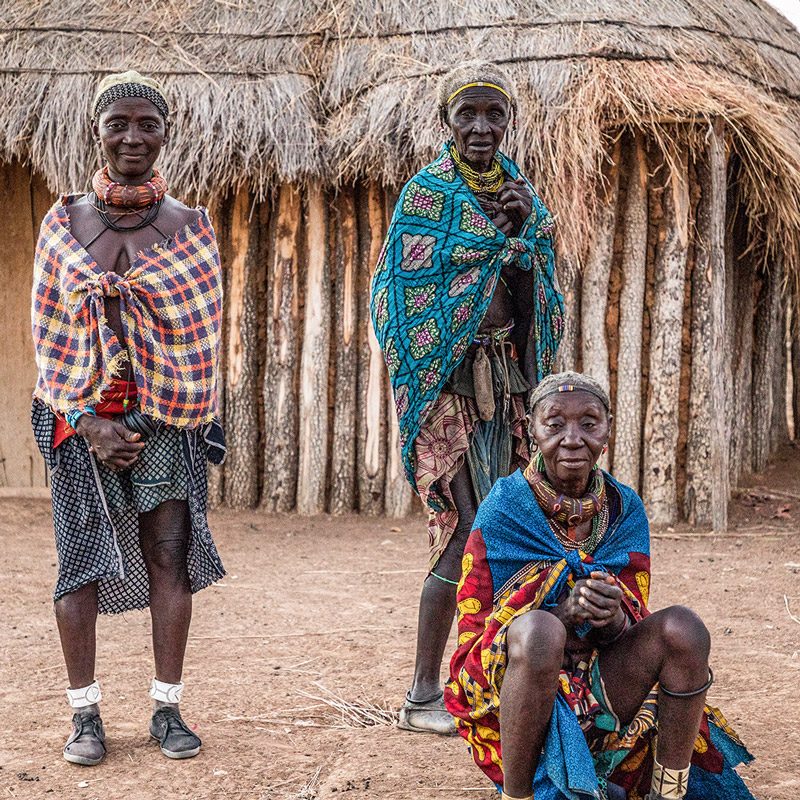
Meeting a Gambue community.
Art and architecture: granaries, basketry and porriños
This herding and farming people builds some of the largest granaries made of plant materials in Africa: true works of rural art. Gambue women are skilled craftswomen and make beautiful basketry, both for their own use and for sale.
The men carve short club-shaped sticks called porriños, which are a symbol of power among the herding societies of southern Angola. Clay pipes, metal jewellery and bead and clay necklaces are other examples of Gambue art. Their houses are similar to those of the Muila, but somewhat smaller, and their villages are more compact, always enclosed by a palisade of logs.

Traditional Gambue hairstyle.
Aesthetics and beliefs: clay hairstyles and necklaces for life
For traditional Gambue women, hairstyle is very important and meaningful. The women coat their hair with a mustard-coloured paste made from a crushed yellowish stone mixed with cow dung and herbs, and decorate it with beads. They also use wooden headrests, some beautifully carved, to protect their hairstyles.
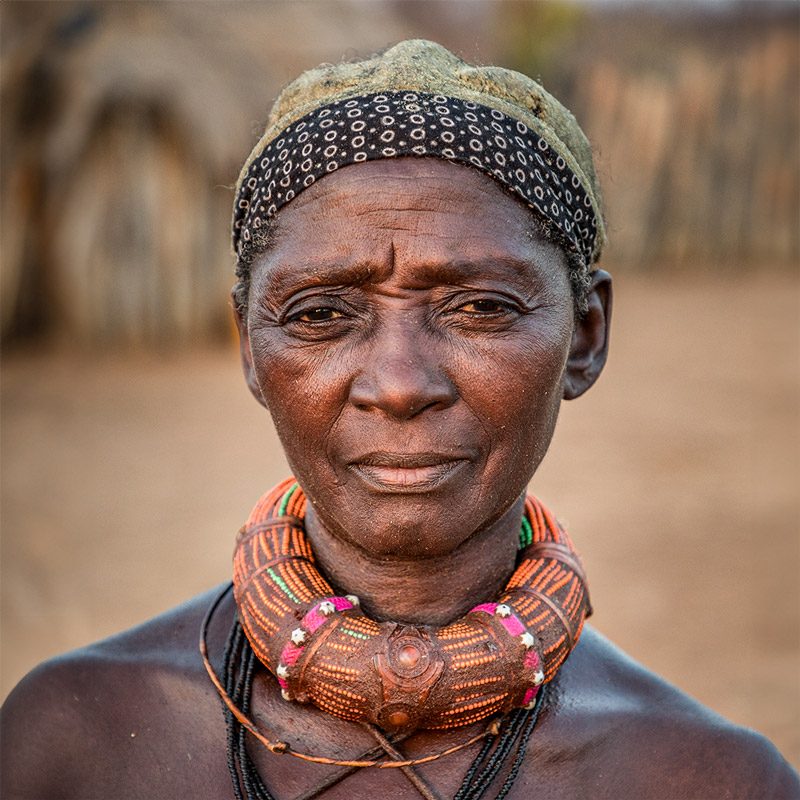
The women, mainly those over fifty, also wear large necklaces known as missanga. Once married, they begin to wear a set of stacked bead necklaces called vilanda. They never take their necklaces off – they even sleep in them.

Traditional missanga necklace.
Nowadays, only the older generations wear traditional attire, except for remote Gambue groups in Cunene Province, where young women with the traditional clay hairstyle can still be found. The Gambue combine their traditional religion, centred on bull worship, with Christianity, which is increasingly present in areas near urban centres.

Young Gambue woman with a traditional hairstyle.
Challenges facing the Gambue
The Gambue are the least known people of the Huíla Plateau. Their neighbours, the Handa, the Muila and the Humbi, attract tourists in search of a striking aesthetic that the Gambue perhaps do not have. However, they are one of the Angolan tribes that have best preserved their customs and adapted to the challenges of modern times.
The proximity of Bicuar National Park, the presence of Khoisan families in their territory and the nearness of Lubango open up a hopeful future for this forgotten people.
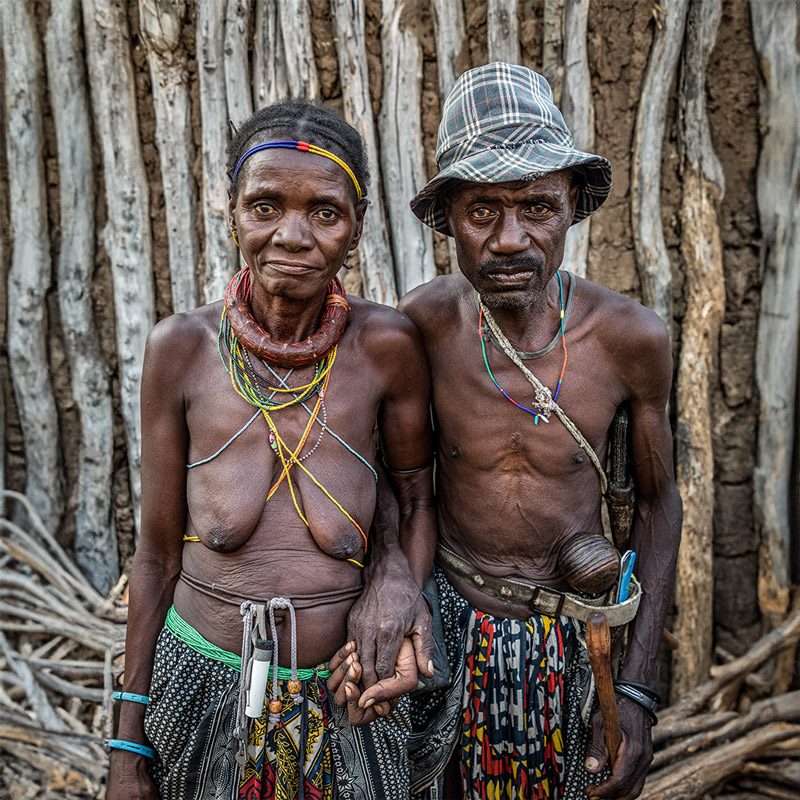
You can learn more about this people on the Gambue page of 101 Last Tribes.
© Photographs by Aníbal Bueno, taken during our trips to Angola.
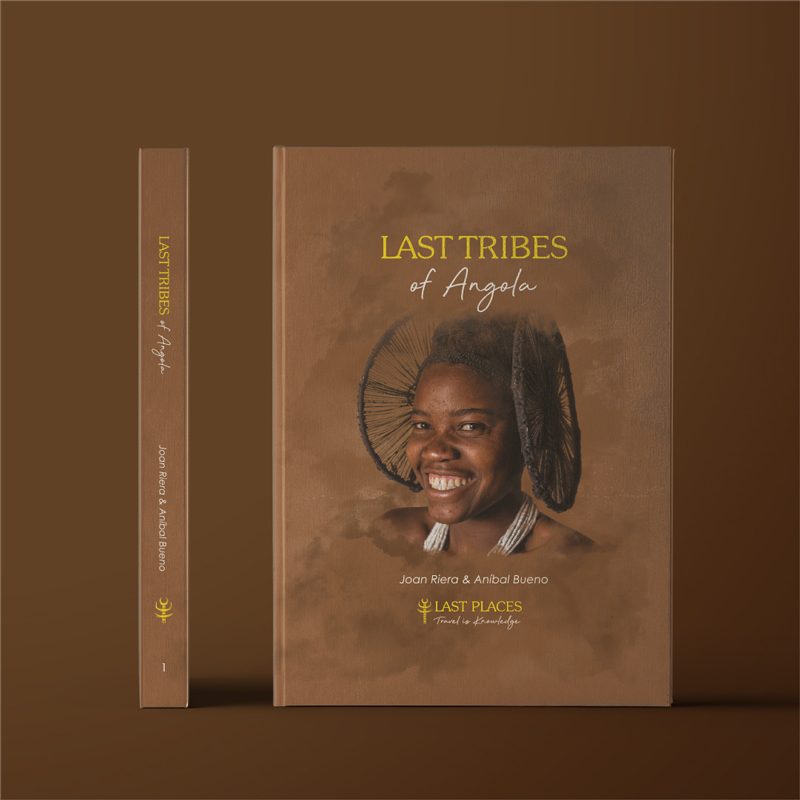
Discover the tribes of Angola with the book ‘Last Tribes of Angola’
If you would like to learn more about these southern peoples before you travel, you can read Last Tribes of Angola, the result of a joint project by anthropologist Joan Riera and ethno-photographer Aníbal Bueno. Written in English and Spanish (bilingual edition) and illustrated with a wealth of photographs, drawings and maps, the book is a unique visual guide to the most remote tribes of south-west Angola.
Spain and Portugal, including the islands: buy the book from Exlibric
Rest of the world: buy the book on Amazon
Would you like to meet the Gambue?
The Gambue live on the Huíla Plateau, in the south-west of the country. If you would like to travel to Angola, on the destination page you will find our upcoming departures, what to see in the country and useful information to help you prepare.



 ES


