

South Sudan
South Sudan tour with Joan Riera
22 – 30 Jan 2027 · 9 days · From 3,250€
This South Sudan tour with Joan Riera will take us into the heart of the White Nile and the mountains in the east of the country, one of the last places on the planet where life is still organised around cattle, scarification and vernacular architecture. We will be accompanied by anthropologist Joan Riera, who specialises in animist religions and in processes of cultural recovery among tribal societies. Through his eyes, each encounter with the Mundari, the Lotuko, the Larim and the Toposa will also be an opportunity to understand their social organisation, their rituals and their relationship with the land.
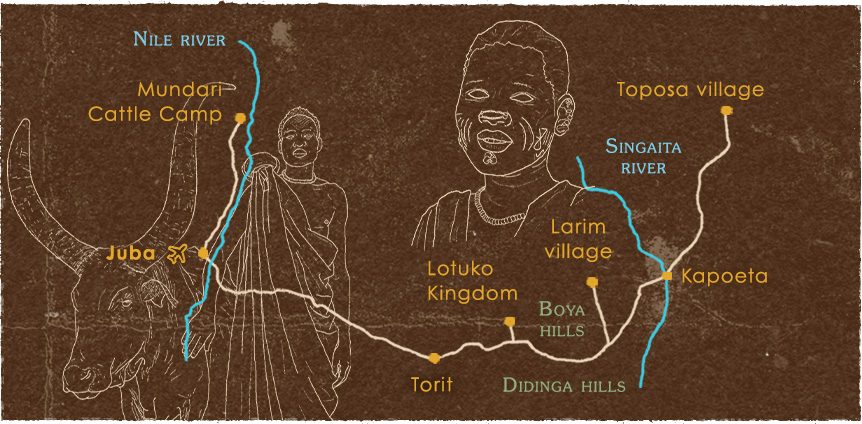
We will begin by camping among the Mundari, beside the White Nile. We will continue towards Torit to enter the Lotuko world, with its 14th-century stone villages, and finish in the arid lands of Kapoeta, among the Toposa and the Didinga, where the tribal market is still the true centre of social life. This is a special departure: if you are looking for the route we run every year, with more nights camping among the Toposa, take a look at our South Sudan tour.
We will travel in a group of 4 to 12 travellers, accompanied by Joan Riera and an English-speaking local guide. Over 9 days we will cross the country in 4x4 vehicles, combining nights in hotels with camping beside the communities, with camping equipment and a cook, and we will return from Kapoeta to Juba by light aircraft. In the detailed itinerary you will find the day-by-day programme, the planned accommodation, the domestic flight, the meals included, the length of each transfer and what the price includes. Download the trip itinerary and we will send it to your email address.







Our trip to South Sudan: what we will discover
Mundari cattle camp: life alongside the herds on the White Nile
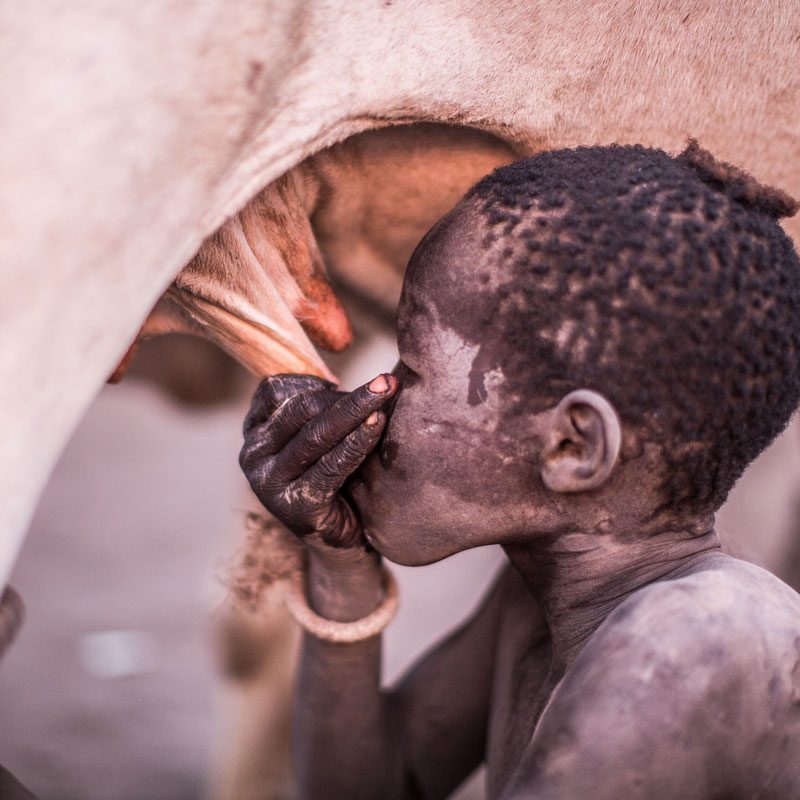
As soon as we arrive in Juba we will set off for a Mundari cattle camp on the banks of the White Nile. The Mundari are herders who sleep beside their cows and care for them as if they were members of the family. We will camp next to the cattle camp and, from the very first moment, step into a life that revolves around cattle: the smoke that keeps the mosquitoes away, the young herders and the coming and going of the herds.
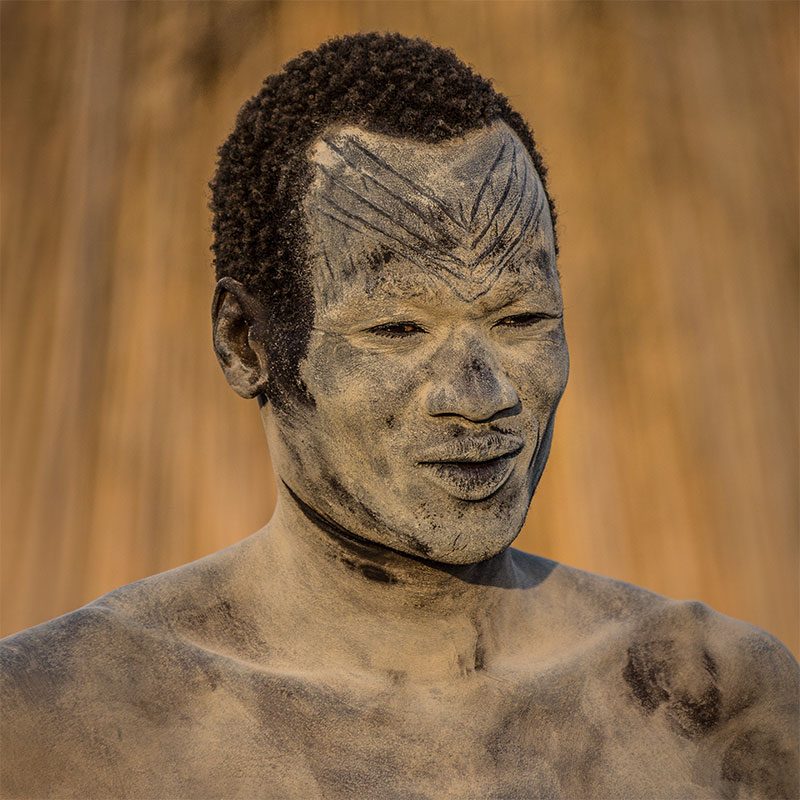
For the Mundari, the camp is also a school: here young people learn how to behave in society and how to relate to their sacred cattle, regarded as intermediaries between people and spirits. We will spend a full day on unhurried photography, sharing daily life and observing: milking, ash massages, hairstyles and everyday life in the camp.
With Joan Riera we will document the naming ritual and the corsets, one of the most distinctive elements of Mundari body aesthetics. On our last morning we will make the most of the dawn light to photograph the camp before heading east.

Torit and a 14th-century Lotuko village
From the White Nile we will cross the landscapes of the east to Torit, the regional capital of Eastern Equatoria, home to the most traditional tribal groups in South Sudan. Not far from there, after a short walk, we will reach a 14th-century Lotuko village. Its vernacular architecture – terraces, stone walls and granaries – reflects a social structure that can be read in the very layout of the village.
Lotuko society is governed by a tandem: a hereditary queen or king, the ‘rainmaker’, and an age group that changes every 20 to 30 years. We will camp near the village so that we can photograph it in the golden afternoon light over the mountains. [photos]
The Larim: scarification and architecture in the hills
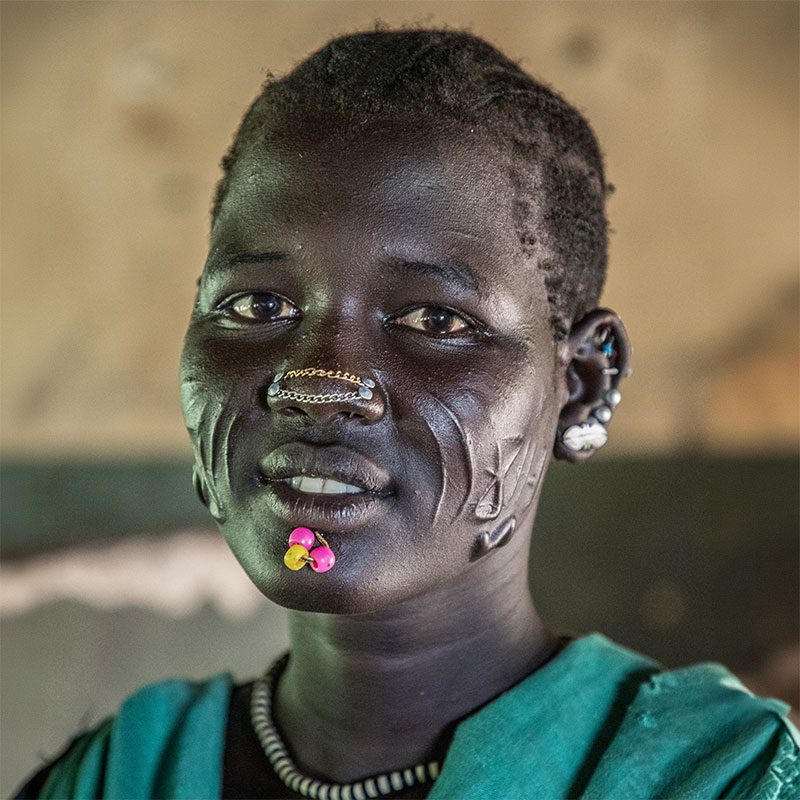
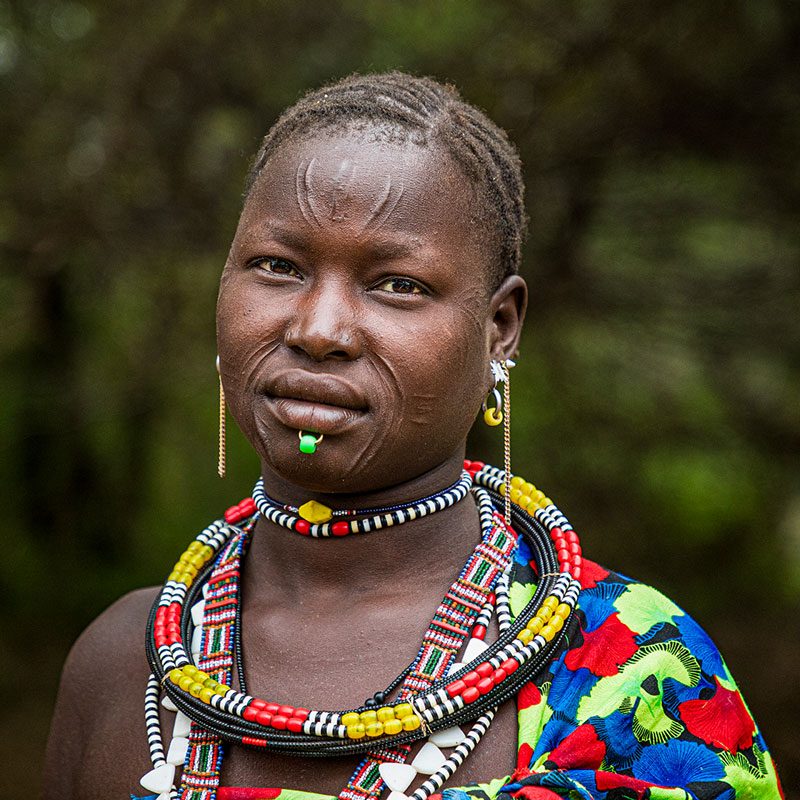
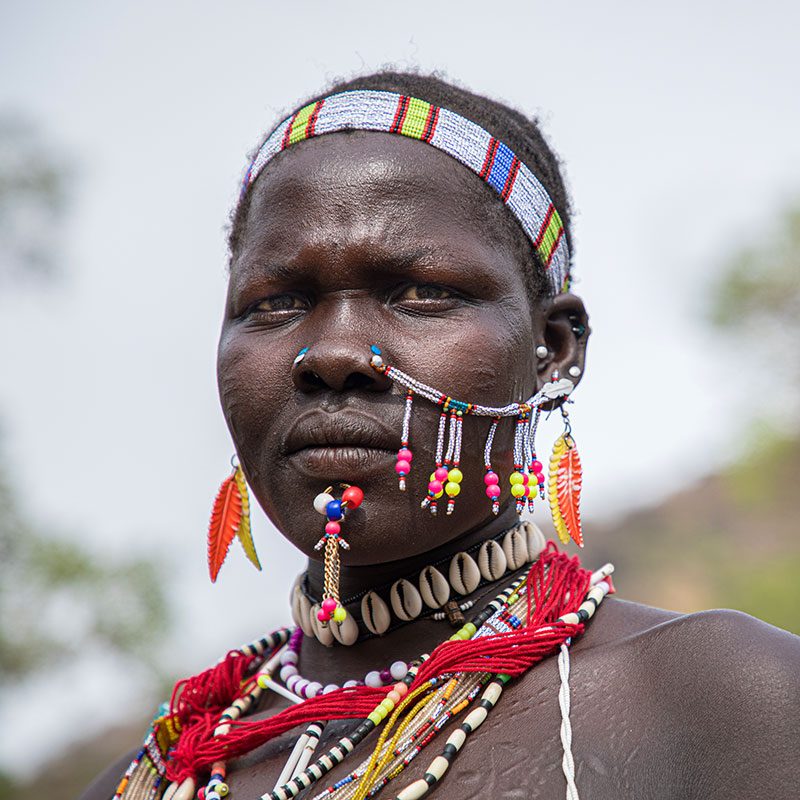
We will then head into the territory of the Larim people, the most scarified people in South Sudan, in the Boya Hills. Farmers and herders related to the Murle, the Larim preserve a very particular architecture and a body aesthetic in which scarification and adornment are still very much present.
It will be a very intense day, both photographically and anthropologically: we will document their scarification, their adornments, their villages and their daily life. We will camp beside the villages and, the following morning, take our last photographs before continuing towards Kapoeta. [photos]


Kapoeta: the Toposa, the Didinga and the tribal market
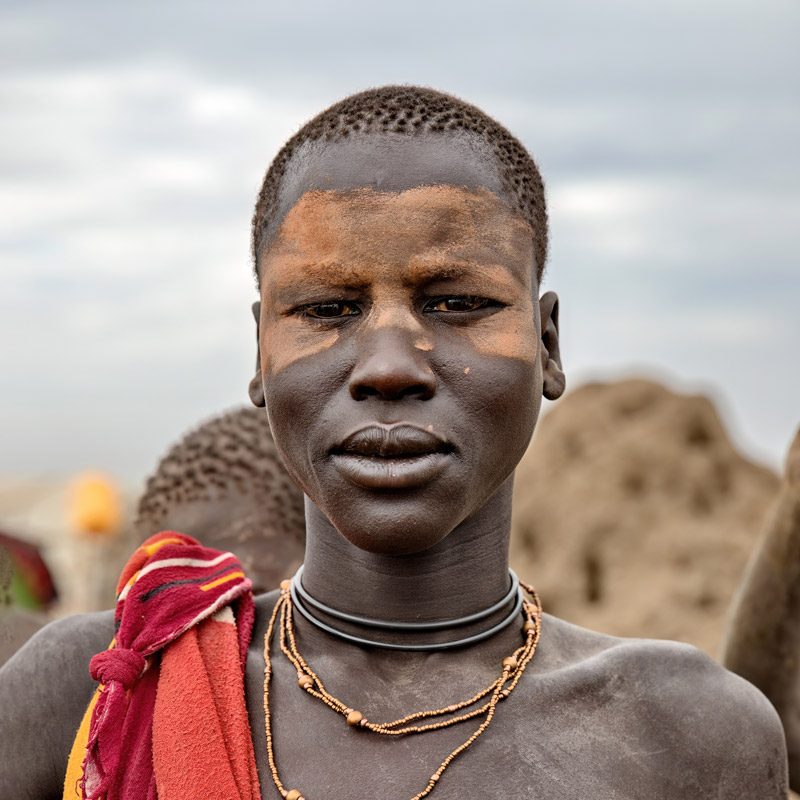
In the arid lands of Kapoeta we will meet the Toposa, cattle herders known in East Africa for their cattle raids and their conservative customs. Facial and body scarification is still common among them, in both men and women.
The next day we will visit the tribal market of the Toposa and the Didinga, the true centre of social life in the region. It is one of the best moments of the trip to understand trade, adornment, the role of cattle and the relationships between the different groups. We will then return to Juba, where the route will end.

Travelling with an anthropologist: Joan Riera’s perspective
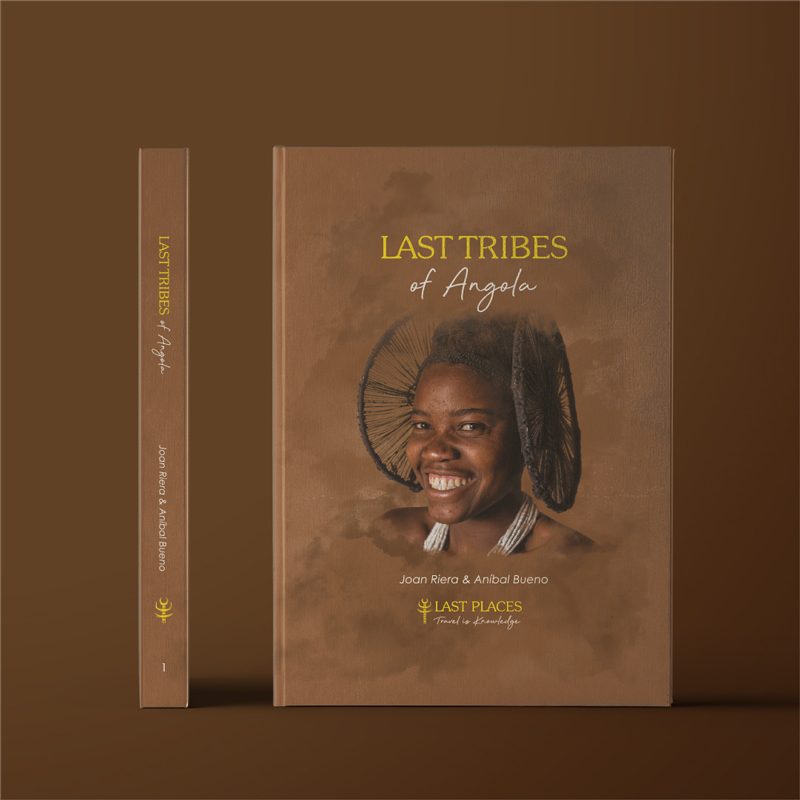
Joan Riera is an anthropologist who specialises in animist religions and in processes of cultural recovery among tribal societies. Together with ethno-photographer Aníbal Bueno, he is the co-author of the book Last Tribes of Angola. During the trip, his knowledge will help us place each encounter in its context: why cattle are at the centre of Mundari life, how power is organised among the Lotuko or what role scarification plays among the Larim.
© Photographs by Aníbal Bueno and Jordi Zaragozà Anglès, taken during our trips to South Sudan.
Scheduled departures
More trips to South Sudan
We can also organize your tailor-made trip to . En este caso, indícanos tus intereses mediante el formulario de contacto que encontrarás más abajo.
Get in touch with our experts.

 ES


