
The Hakaona tribe of Angola, also known as the Muhakaona, live in the wooded savannah and rocky hills around Oncocua, near the Cunene River and the border with Namibia. They are known as ‘the black Himba’ and often look after the Himba’s herds as a sign of social submission.

Goat herders in the hills of Oncocua
The Hakaona are mainly goat herders, and the number of head of livestock marks each family’s social status. They also practise rain-fed farming, growing crops such as maize and millet.
The men are renowned traditional healers and the women are valued as excellent craftswomen, although both activities are considered less socially important than herding. They live in a tribal structure based on clans, led by the eldest man.
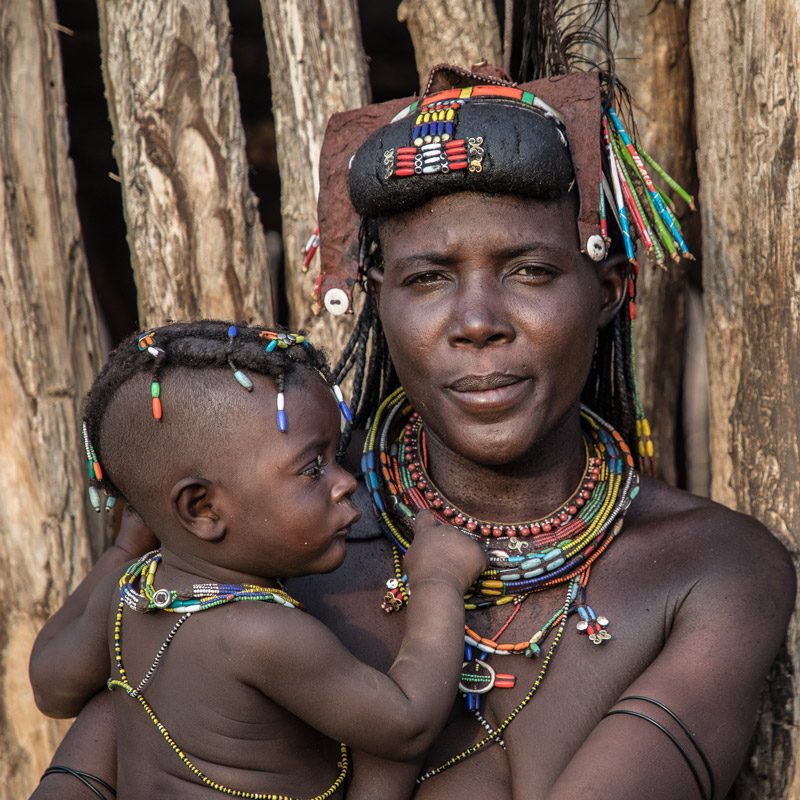
The women wear a striking headdress called 'kapapo' made of manure, fat and herbs. A common practice among Hakaona women is the removal of some lower teeth, for beautifying purposes.

The Hakaona are one of the few peoples in Angola who still make cowhide baby carriers, which they decorate with coloured beads. The women also make their own dolls from wood and hair, natural or artificial.

Architecture: wooden houses and large enclosures
Their architecture is similar to that of their neighbours, the Dimba: rectangular wooden houses with thatched roofs, notable for their hinged doors, which are held shut with a stick. The houses, granaries and stables are protected by a large wooden fence with one gate for entering and another for leaving.

Discover the tribes of Angola with the book ‘Last Tribes of Angola’
If you would like to learn more about these southern peoples before you travel, you can read Last Tribes of Angola, the result of a joint project by anthropologist Joan Riera and ethno-photographer Aníbal Bueno. Written in English and Spanish (bilingual edition) and illustrated with a wealth of photographs, drawings and maps, the book is a unique visual guide to the most remote tribes of south-west Angola.
Spain and Portugal, including the islands: buy the book from Exlibric
Rest of the world: buy the book on Amazon

Would you like to meet the Hakaona?
The Hakaona live in the wooded savannah around Oncocua, in the south-west of the country. If you are thinking of planning a trip to travel to Angola, on the destination page you will find our upcoming departures, what to see in the country and useful information to help you prepare.

© Photographs by Aníbal Bueno, taken during our trips to Angola.
You can learn more about this people on the Hakaona page of 101 Last Tribes.

 ES


